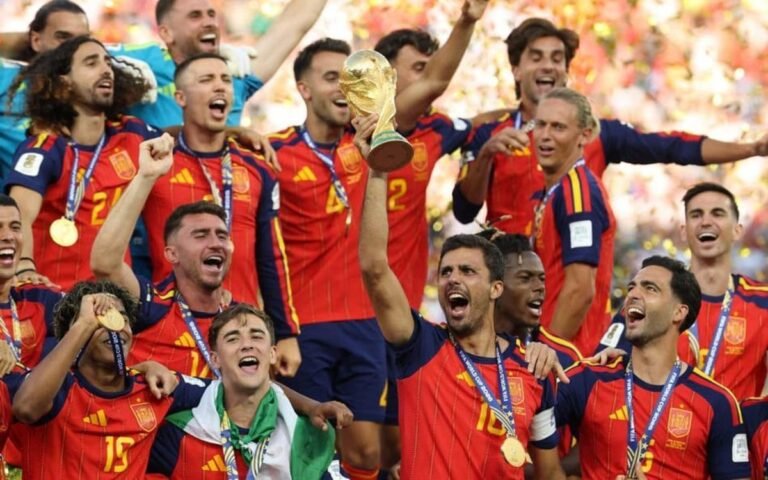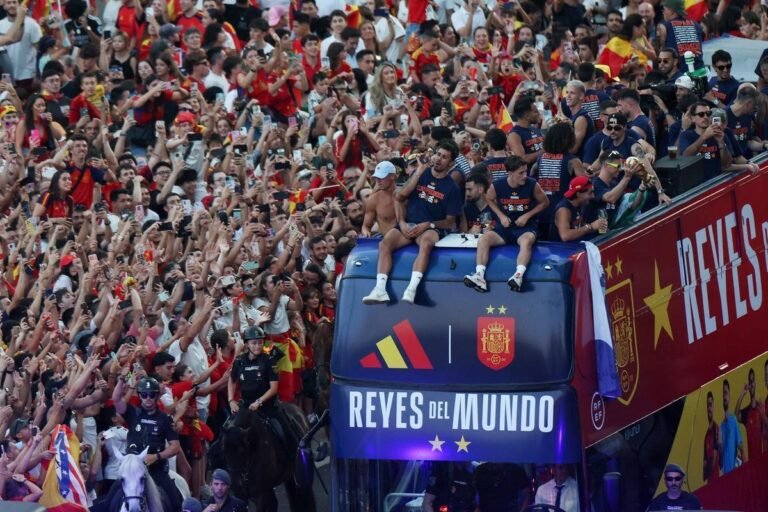


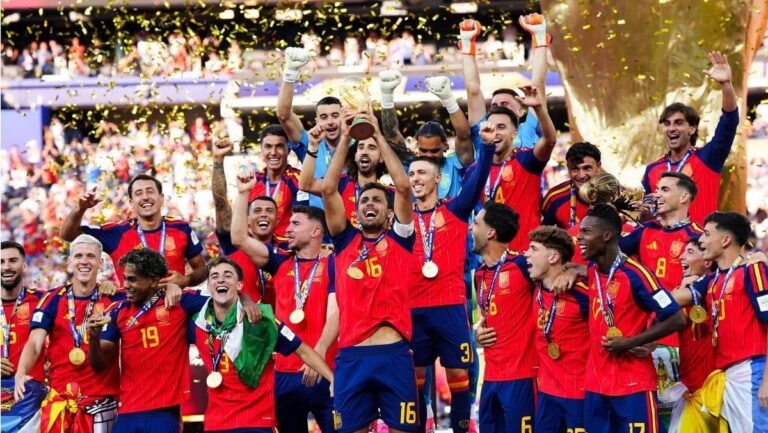
La Furia at the Summit! Following their World Cup glory, the Spanish national team now dominates the global football scene, as traditional powerhouses stumble and new contenders surprise in the FIFA rankings.
The world of international football has just undergone a seismic reconfiguration. The recent conclusion of the World Cup not only crowned a new champion but also profoundly reshaped the structure of the FIFA World Ranking. Spain, who lifted the coveted trophy, now holds the title of the best national team on the planet, an achievement that reflects the passion and determination shown on the field.
This Spanish ascent to the top is not just a number, but the culmination of a successful project, surpassing the ever-strong Argentina, which, despite finishing as runner-up, remains among the powerhouses. It is a moment of glory for La Furia, who now sets the pace for world football.
Rise and Fall on the World Stage
With an impressive 1995.88 points, Spain unseated Argentina, which now holds the second position with 1970.37 points. The dominant performance of the Spaniards in the tournament was decisive for this shift. France secured the third spot (1948.97 points), while England, who clinched third place in the World Cup, accumulated an additional 33.41 points but could not overtake the French, remaining in fourth position with 1922.83 points.
Brazil and Other Top 10 Highlights
To the delight of Brazilian fans, the Brazil national team, which started the World Cup in sixth place, managed to climb one position. Now, Brazil ranks in fifth place in the FIFA ranking, with 1804.92 points, demonstrating the resilience and quality of national football. Close behind, Morocco (1803.99 points) and Portugal (1787.85 points), who were previously in fifth, complete the top seven. The top 10 is completed by Belgium (1778.36 points), Netherlands (1775.54 points), and Mexico (1754.30 points), which climbed four positions, highlighting the growing strength of football in North America.
Germany’s Fall and Norway’s Surprise Ascent
The most drastic change in the ranking was the precipitous fall of Germany. The four-time world champions, who did not perform well in the World Cup, plummeted from the top 10 and now find themselves in 12th place, behind Colombia. A tough blow for one of football’s most traditional national teams. On the other hand, Norway, which was Brazil‘s conqueror in the competition, was the team that shone brightest in its climb. The Norwegians climbed 12 positions, reaching 19th place, a remarkable achievement that reinforces the unpredictability and beauty of the sport.
A New Post-World Cup Landscape
The post-World Cup FIFA Ranking reflects not only recent performance but also the long-term evolution and work of national federations. Spain celebrates a historic moment, while other national teams will need to recalibrate their strategies. Football continues to be a melting pot of emotions, where passion and dedication can lead to the top, but complacency can be costly. The upcoming cycles promise even more twists and turns and the relentless pursuit of global glory.