

The controversial deal between Corinthians and the platform Fatal Fans reignites the debate about exposing adult content brands to a predominantly young and vulnerable audience.
The financial crisis plaguing Corinthians seems to have put the club at an ethical crossroads. By announcing Fatal Fans as its new main sponsor, Timão is not just displaying a brand on its jersey, but challenging the boundaries of what is acceptable in Brazilian sports advertising. After the saturation of sports betting, national soccer now faces a reality where adult entertainment becomes the face of the club’s passion.
The crucial point of this scenario is exposure. Data from Nexus, commissioned by the CBF, reveals that more than half of young Brazilians consume soccer weekly. The entry of Fatal Fans onto the club’s uniform, without any effective barrier, places millions of children and adolescents just a click away from erotic content, quickly accessible through social media, disregarding any attempt at digital protection.
The Ethical Dilemma and the Effectiveness of Child Protection
Although Brazil has made progress with the ECA Digital, the protective barrier is almost symbolic against the inherent curiosity of the connected era. Quick tests on platforms like TikTok prove that the brand, when displayed on athletes’ chests, generates a trail of searches that lead directly to the consumption of sexual material.
“The central issue is not moralism, but rather which brands soccer chooses to legitimize in front of an audience that includes millions of children and adolescents.”
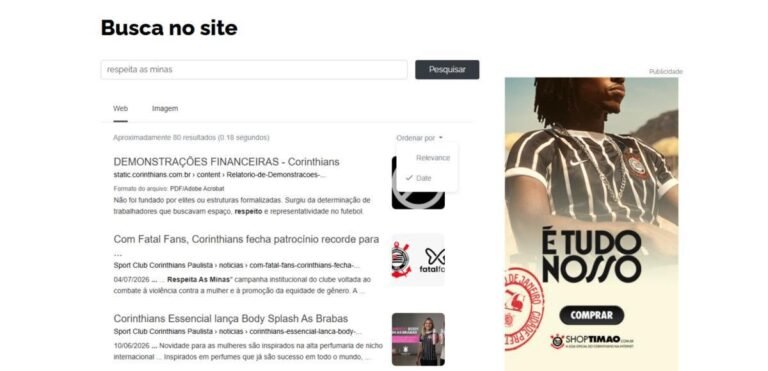
The attempt to link the brand to social causes, such as the “Respeita As Minas” project displayed on the women’s team jersey, sounds to many fans like a questionable marketing strategy. In practice, the absence of a functional portal or concrete actions up to the time of this writing reinforces the feeling that the social commitment is just a smokescreen.
The Future of Advertising in Soccer
Corinthians‘ financial urgency is undeniable, but the decision raises an uncomfortable question for the entire market: where is the ethical brake? If sports is the country’s most valuable showcase, it carries the responsibility of filtering who can occupy this privileged space.
The next step now is to see if the fanbase and regulatory bodies will demand greater transparency and social responsibility. While the club focuses on the next game on the field, off the field, the debate about advertising ethics and the protection of its young fans becomes the most important—and, for now, the most dangerous—match to be won by Timão.