
The CBF holds an immersion in New York focusing on independent leagues like MLS and NFL, but the choice of models sparks debates about centralization in Brazilian football.
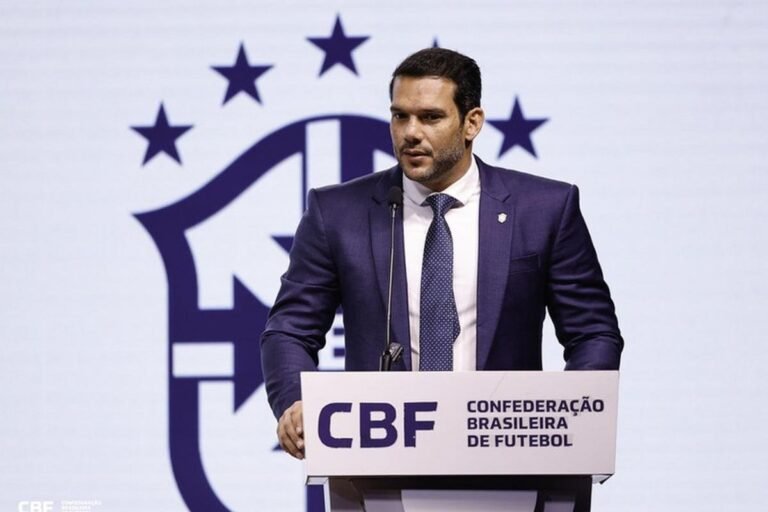
The pursuit of new administrative horizons led the leadership of the CBF, along with presidents of federations and directors of Serie A and B clubs, to a strategic immersion in New York during the 2026 World Cup. The entity’s stated objective is to delve into the best governance and management practices of the world’s major sports leagues.
However, the initiative spearheaded by president Samir Xaud has not gone unnoticed by critical eyes behind the scenes. The schedule, which includes visits to MLS (Major League Soccer) and meetings with the NFL, highlights a fundamental contrast between what is observed abroad and the project the entity plans for our country.
Contradiction in Management Models
The point of tension lies in the nature of the organizations being visited. Both MLS and NFL operate as leagues with absolute independence from their respective national federations. The same pattern was observed in previous CBF visits to La Liga in Spain and the Bundesliga in Germany.
“Directors observe that the entity has been taking clubs to learn about structures where leagues have administrative and commercial autonomy, while discussing a model for Brazilian football that would keep the competition under the CBF’s own umbrella,” points out the behind-the-scenes articulation.
New York Agenda
The schedule for the so-called “CBF Immersion – New York 2026” was designed to be intense on June 12 and 13. On Friday, guests will follow a schedule at the MLS headquarters, following a lunch at the Westin Hotel. Saturday will be dedicated to an exchange with NFL representatives.
Officially, the CBF defends that the goal is to foster the sustainable development of the sports industry in Brazil. However, the big question for the clubs remains: to what extent will this exchange serve to truly decentralize power in national football, or will it remain solely in the realm of administrative theory? The unfolding of these negotiations about the future of Brazilian competitions promises to be the next major chapter behind the scenes of the sport.