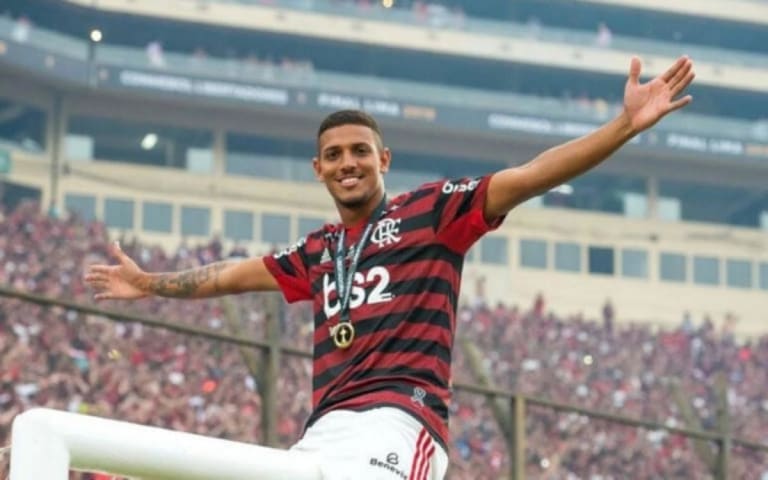


José Boto, Flamengo’s director of football, has identified four players active in Portugal who, according to his analysis, fit the ideal profile to bolster the team in future transfer windows.
José Boto, the renowned football director at Flamengo, took advantage of the FIFA international break to attend a major event in Portugal, the Portugal Football Summit. During his appearance, the Rubro-Negro executive discussed the dynamic Portuguese transfer market and revealed names that have caught his eye.
Among the players mentioned, four stood out in Boto‘s view as potential reinforcements for the Mais Querido. The list includes young talents with international experience and even one player recently involved in a controversy with Vini Jr., sparking speculation about potential future moves by the club.
The Football Director’s Analysis
In an interview with the newspaper Record Portugal, José Boto expressed his appreciation for specific players currently active in the Portuguese league:
I really like that Porto player with the unusual name, Froholdt; I really like him. I followed him last year and I’m a big fan. But I think there are plenty of players who could play for Flamengo. I really like Maxi Araújo from Sporting, and Prestianni is also an excellent player. And then we have the Portuguese players, like Tomás Araújo… there are several players who would certainly fit into Flamengo.
Gianluca Prestianni and the controversy with Vini Jr.
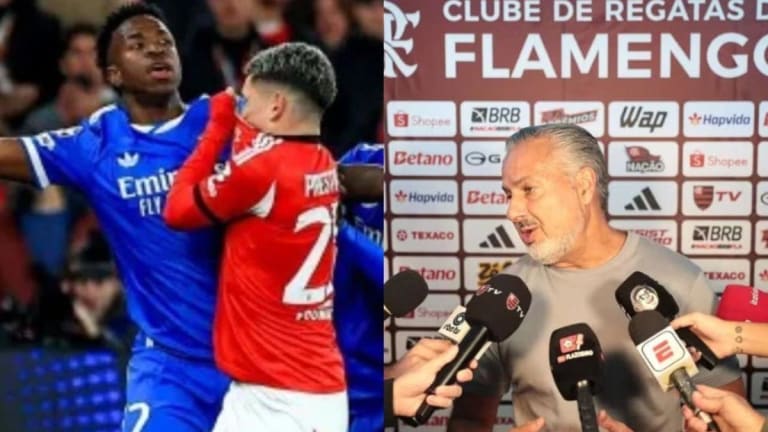
One of the names that generated the most buzz from Boto‘s statement was Gianluca Prestianni. The Argentine forward, who plays for Benfica, recently made headlines due to a controversy involving Vini Jr.
The player received a six-match UEFA suspension for discriminatory conduct against the Real Madrid star during a Champions League match in February 2026. During a previous friendly between Flamengo and Benfica in Portugal, Prestianni was booed by the Rubro-Negro fans, who chanted in support of Vini Jr.
Other talents on Boto’s radar
Beyond Prestianni, José Boto mentioned three other players who could potentially join the Flamengo squad. Maxi Araújo, a left-back or winger at Sporting, is a well-known name who has represented the Uruguay national team at the World Cup.
Another highlight is Victor Froholdt, a midfielder for Porto and the Danish national team. Rounding out the list is Tomás Araújo, a center-back for Benfica, who was also cited by the director as a player with the potential to thrive at Mais Querido.
Challenges in signing Portuguese players
Despite his interest in talent playing in Portugal, José Boto highlighted a particular obstacle to signing players born in the country. The executive explained that Portuguese players do not yet view Brazilian football as a natural destination for their careers:
There are many players here that I would like to sign, some Portuguese, others foreign, but playing in Portugal. It’s difficult because the Portuguese player does not yet see Brazil as a country to move to, right?
Competitive salaries in Brazil
Despite the cultural resistance, Flamengo‘s director emphasized that the financial landscape of Brazilian football could be an attractive factor. He noted that clubs in Brazil, including Flamengo, are capable of offering very competitive wages on the market:
Although today in Brazil, very, very good salaries are paid. There isn’t this culture yet of the Portuguese player leaving for Brazil, but there are very good players here in Portugal—not just Portuguese, but also foreign players who play for the ‘big three’—who are players that would fit perfectly at Flamengo.
Boto concluded by indicating that this purchasing power could change that perception in the long run.
José Boto‘s analysis offers a glimpse into Flamengo‘s international transfer strategies, even in the face of cultural challenges in attracting certain player profiles.
The mention of these names in Portugal does not constitute a formal interest by the club at this time, but it reveals the constant scouting of talent and the pursuit of opportunities that could strengthen the Rubro-Negro squad in the future. Flamengo‘s financial capacity remains a major asset at the negotiating table.