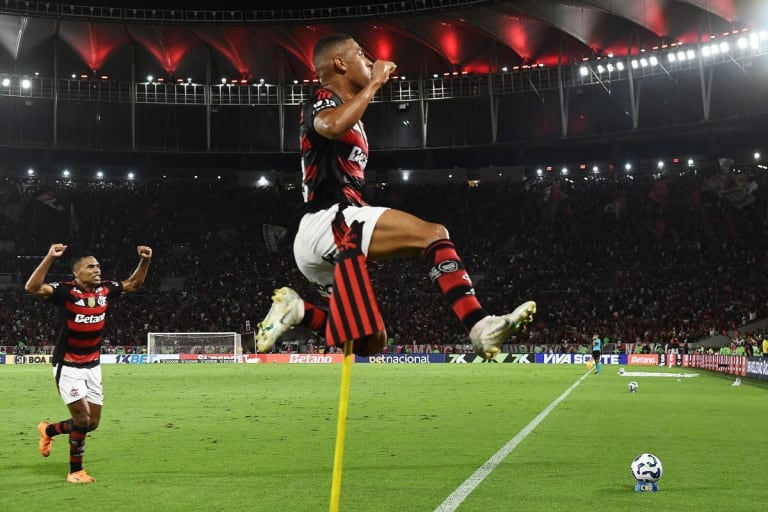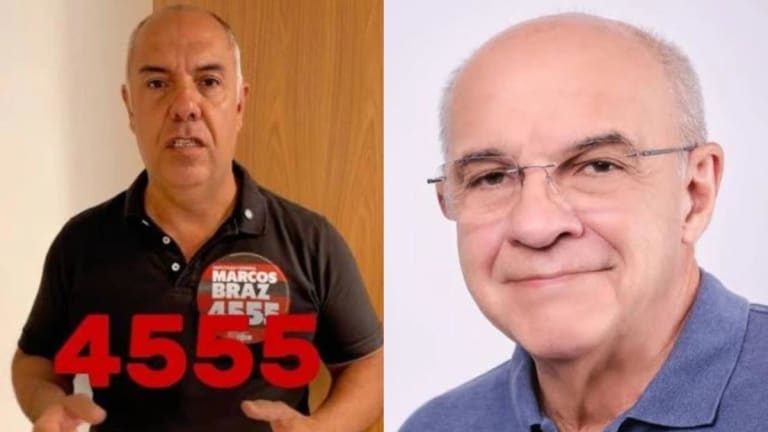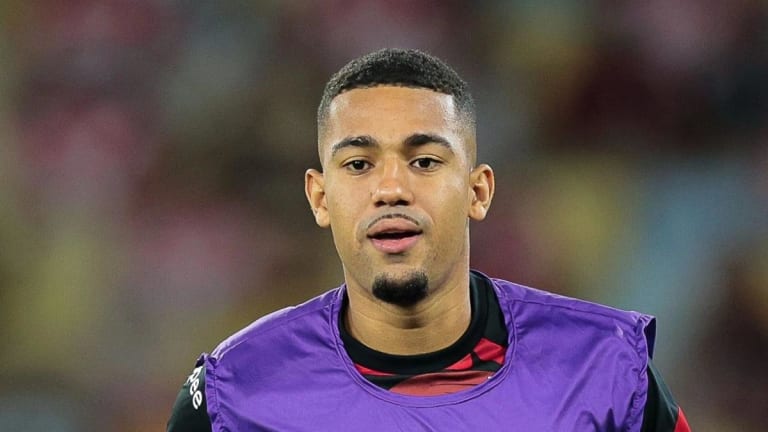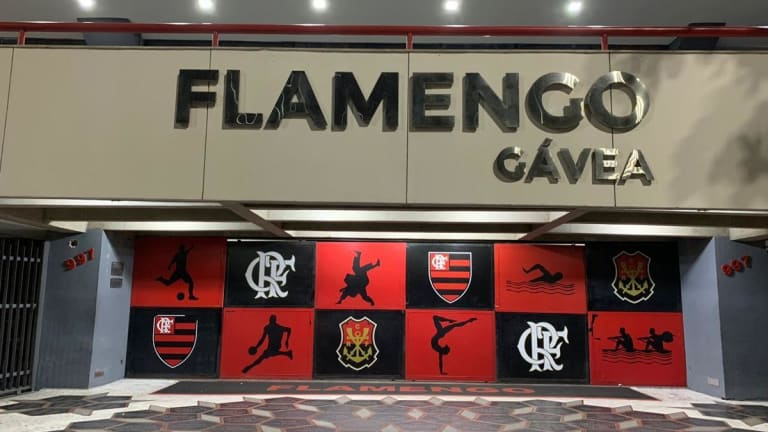


Five governors elected in the first round declared their support for Flamengo, making it the most represented club among state executive leaders.
The Brazilian political landscape, largely defined during the first round of elections, reveals a curious and highly symbolic data point: football.
Among the 20 governors elected directly last Sunday, five share a passion for Flamengo, solidifying the Rubro-Negro club as the most cited among this group.
This result is an indicator of how regional and national identities intertwine with sporting passion, even across a diverse political spectrum.
The elected Flamengo supporters span different regions of the country, crossing party lines with distinct political paths.
This representation demonstrates the club’s reach and its strength as a symbol, capable of uniting individuals from different ideological spectrums under the same banner.
Flamengo tops the podium among elected governors
The count shows that Flamengo stands out with five governors.
In the Northeast, the Rubro-Negro passion is represented by Eduardo Braide (PSD) in Maranhão, Lucas Ribeiro (Progressistas) in Paraíba, and Rafael Fonteles (PT) in Piauí.
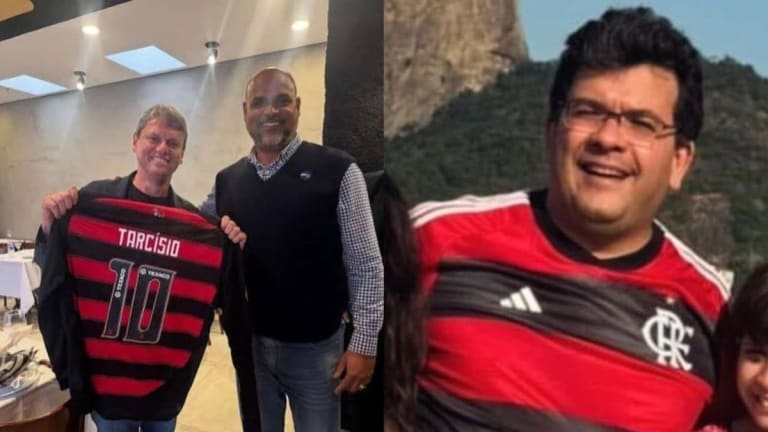
Rounding out the quintet are Eduardo Riedel (Progressistas) in Mato Grosso do Sul and the recently re-elected governor in São Paulo, Tarcísio de Freitas (Republicanos).
The party diversity is notable, with the five governors belonging to four different parties: PSD, Progressistas, PT, and Republicanos.
This mix shows that love for the club transcends political alliances.
Grêmio and other clubs share the preferences
In second place, Grêmio appears with two governors.
Zucco (PL) was elected in Rio Grande do Sul, while Otaviano Pivetta (Republicanos), a native of that state, won the governorship of Mato Grosso.
The remaining clubs mentioned on the list have one representative each.
The list includes national football giants such as Palmeiras, Santos, and Cruzeiro, alongside traditional regional teams like Remo, Paysandu, Santa Cruz, Vitória, Ceará, Goiás, Figueirense, and Confiança.
There are also cases of split loyalties.
Lucas Ribeiro, for instance, has his heart divided between Flamengo and Campinense.
Meanwhile, Arthur Henrique (PL), elected in Roraima, supports both São Raimundo-RR and Palmeiras.
The only governor who did not explicitly declare his team was JHC (PSDB), from Alagoas.
Tarcísio de Freitas brings Flamengo to the country’s largest electoral college
The most high-profile case is that of Tarcísio de Freitas.
A Rio de Janeiro native who secured his re-election in São Paulo, the governor now leads Brazil’s largest electoral college, where football is intensely contested by both local and national clubs.
The Rubro-Negro leadership among governors elected in this first round echoes the scenario from the previous election, when Flamengo already stood out.
This fact reinforces the strong connection between sports and political representation in various spheres of the country.
Final stretch for the complete map of club preferences
It is worth noting that the tally may still change with the second round in seven states: Acre, Amazonas, the Federal District, Espírito Santo, Rio de Janeiro, Rio Grande do Norte, and Tocantins.
Only after the final results are confirmed on October 25th will the complete map of club preferences for all 27 elected governors be consolidated.