
The 2026 World Cup concluded with Spain’s victory, but the multi-billion dollar tournament leaves a trail of political controversy and questions about the future of the sport.
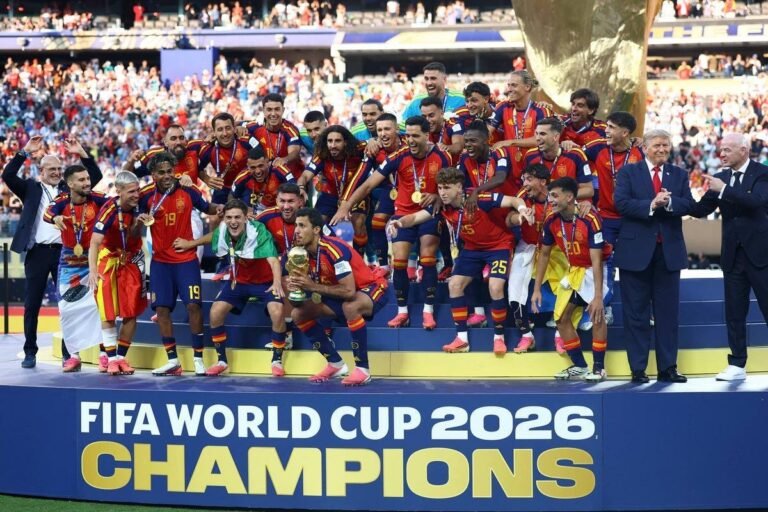
The most expansive edition in World Cup history came to a close in New Jersey, crowning Spain as the grand champion after an electrifying final against Argentina. With a record-breaking 48 teams participating, the tournament held in the United States, Mexico, and Canada reached unprecedented financial heights, with FIFA projecting a staggering $13 billion in revenue.
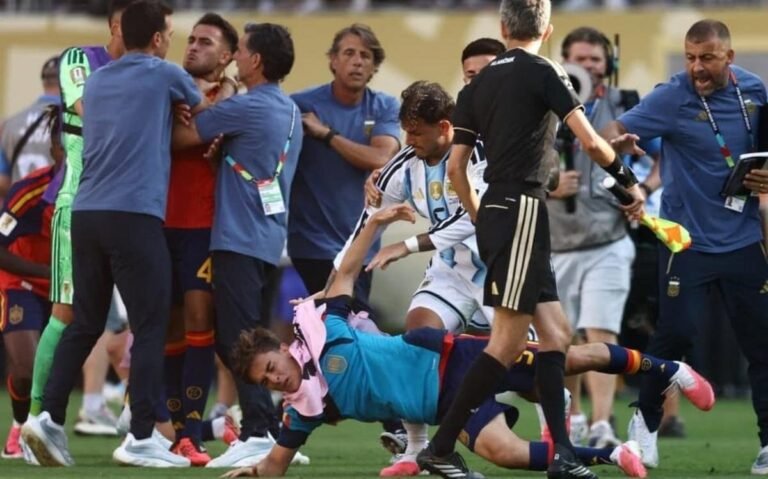
However, behind the grandeur of the numbers and the on-field festivities, the legacy of this World Cup is far from settled. The event was marred by a series of incidents that called into question the autonomy of football’s world governing body and the very transparency of the rules that regulate the sport.
The scandal that shook credibility
The most critical point of the competition was the revelation of a potential collusion between the United States government and the top brass of FIFA. Reports indicate that a direct phone call from President Donald Trump to leader Gianni Infantino resulted in the reversal of the suspension of American forward Folarin Balogun.
“The security of the rules is no longer guaranteed by their guardians,” said a source linked to the European federation during one of the many tense moments that took place behind the scenes of the tournament.
Excessive commercialization and exclusion
Beyond the political crisis, the fan experience was heavily criticized. The adoption of dynamic ticket pricing turned attending matches into a privilege for the few, while the controversial “hydration breaks” were interpreted by many as a maneuver to increase advertising airtime, effectively splitting the pace of the game into four strategic segments for broadcasters.
The disproportionate rigor of American national security also left its mark, including the denial of entry to a FIFA-appointed referee, raising doubts about the viability of holding global events under such severe diplomatic restrictions.
The future under Infantino’s aegis
Despite fierce criticism and dissatisfaction from much of the sporting world, the World Cup’s financial robustness has further consolidated Gianni Infantino‘s power. With full coffers and the support of member federations, the FIFA president has already signaled that he does not intend to stop here.
In the corridors of the organization, a project to expand to 64 teams by 2030 is already being treated as a priority. It remains to be seen whether football, in the name of unbridled profitability, will still hold space for the essence of the sport, or if politics and marketing will definitively dictate the next chapters of this story. Fans, who love the game above all else, continue to watch the next steps of this controversial administration with close attention.