

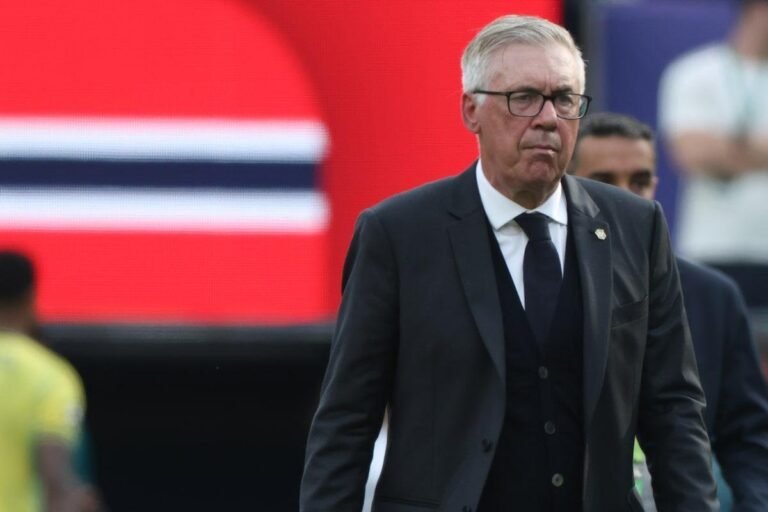
After the painful setback at the 2026 World Cup, Carlo Ancelotti takes the reins of a profound revolution within the Brazil national team, renewing leadership and hope for 2030.
The early exit in the Round of 16 of the 2026 World Cup, with an unexpected defeat to Norway on American soil, left a bitter taste in the mouths of millions of Brazilians. However, amidst the frustration, a strategic decision was made: the continuity of Carlo Ancelotti at the helm of the Brazil national team, a vote of confidence for a cycle that promises deep transformation.
Hired in May 2025, the “Italian Wizard” had just over a year to shape the team, insufficient time to avoid the embarrassment. Now, with a renewed contract and the prospect of a full four-year project, Ancelotti‘s mission is to redesign the identity and future of Brazilian football, targeting glory at the 2030 World Cup.
The Italian Wizard Stays On
Even in the face of Brazil’s worst World Cup performance in 36 years, Ancelotti did not back down from his plans. With his characteristic composure, the coach reiterated his commitment, seeing the defeat as a catalyst for the future. “This is not an end; it’s the beginning of a new cycle,” the coach stated, confident in the quality of the work done over 13 months. “Football is like that. Sometimes you have to deal with the sadness of a defeat. We are used to it, and we will transform this defeat into a new impetus for our work and for the players’ development.”
New Faces in the Coaching Staff
The restructuring will not be limited to the field. Ancelotti‘s technical staff will undergo significant changes. Davide Ancelotti, his son and a key assistant, will leave his position to take charge of Lille in France. There are also uncertainties about the future of Taffarel, the goalkeeper coach, who faced criticism for the lack of new blood among the goalkeepers. The position of national teams coordinator, Rodrigo Caetano, is also under scrutiny, despite his optimistic projections for the next cycle, calling for more time and calm in planning.
The Post-Veterans Era
The central point of the revamp will be to refresh the squad. Established names that defined the last decade of the Brazil national team, such as Marquinhos, Danilo, Alex Sandro, Neymar, and even 34-year-old Casemiro, are not expected to be part of the next World Cup squad. It marks the end of an era, a farewell to players who, despite all their efforts, could not lift the long-desired sixth championship title. Captain Marquinhos acknowledged: “We have to take this blame so that the next generations can have peace of mind to work.”
The Promising Generation for 2030
With the departure of the veterans, the door opens for a new crop of talents. The CBF and Ancelotti had already been observing young prospects, some even included in preliminary lists or called up for friendly matches. Players such as left-back Kaiki Bruno (23 years old, Cruzeiro), defender Vitor Reis (20 years old, Manchester City), and forward Rayan (19 years old), who has already earned the Italian’s trust, are on the radar. Endrick‘s meteoric rise is another example. Names like defender Natan (25 years old, Betis) and midfielder Gabriel Sara (27 years old, Galatasaray) also promise to get more opportunities.
The Start of the Road to 2030
The countdown to the 2030 World Cup, which will be hosted in Spain, Portugal, and Morocco, officially begins in September. The Brazil national team has two friendly matches scheduled against Australia, on the 25th and 29th, in Townsville and Brisbane, respectively. This will be the first test for a team that aims to be renewed, ambitious, and full of “Raça, Amor e Paixão” (Grit, Love, and Passion), seeking to reclaim dominance in the world football scene.
Brazilian fans, hurt by the recent elimination, eagerly await the changes promised by Ancelotti. It is the beginning of a new journey, where the passion for football and the relentless pursuit of the sixth star become the fuel to rewrite the history of the Brazil national team.
RELATED NEWS
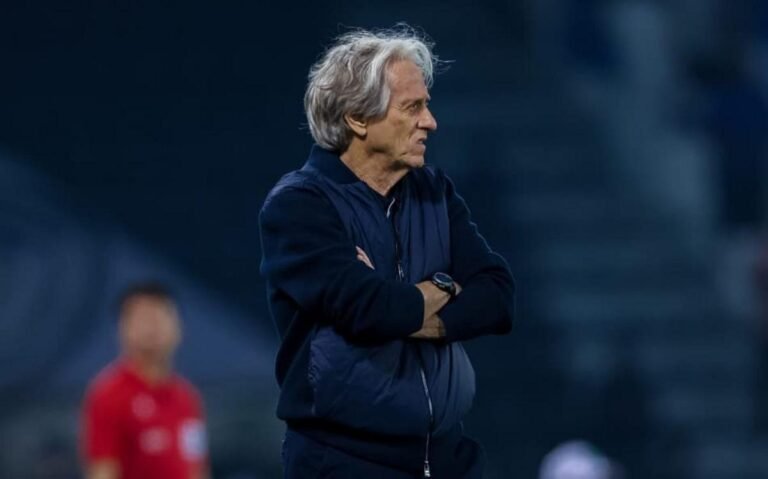 Jorge Jesus reveals behind-the-scenes of near Brazil move and cites preference for Pedro
READ MORE
Jorge Jesus reveals behind-the-scenes of near Brazil move and cites preference for Pedro
READ MORE
 Jorge Jesus: Close to the Brazilian National Team, he was already suggesting players for a preliminary squad
READ MORE
Jorge Jesus: Close to the Brazilian National Team, he was already suggesting players for a preliminary squad
READ MORE
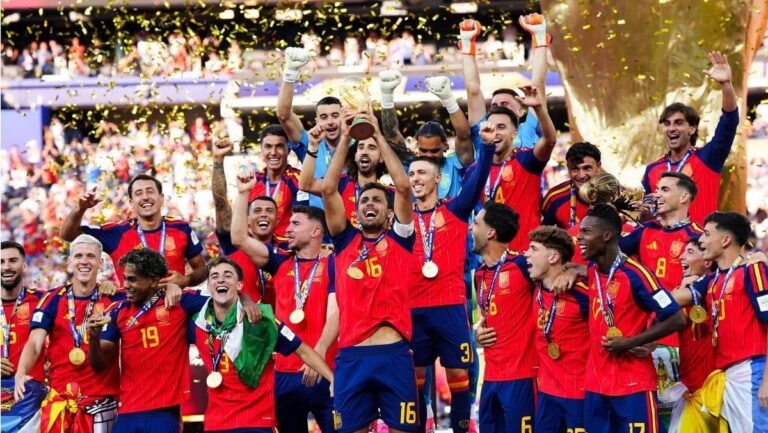 Spain Takes Top FIFA Ranking Spot After World Cup Title Win, Germany Exits Top 10
READ MORE
Spain Takes Top FIFA Ranking Spot After World Cup Title Win, Germany Exits Top 10
READ MORE