

A historic milestone at the 2026 World Cup: Brazil, Germany, and Italy are absent from the quarterfinals, an unprecedented scenario in world football.
The 2026 World Cup has entered the history books with a surprising and, for many, painful chapter. For the first time since the tournament began, the quarterfinals will not feature Brazil, Germany, or Italy. Together, these football powerhouses hold 13 World Cup trophies, but now they see their hegemony shattered in a moment that reveals a global rebalancing of power and, in some cases, deep internal crises.
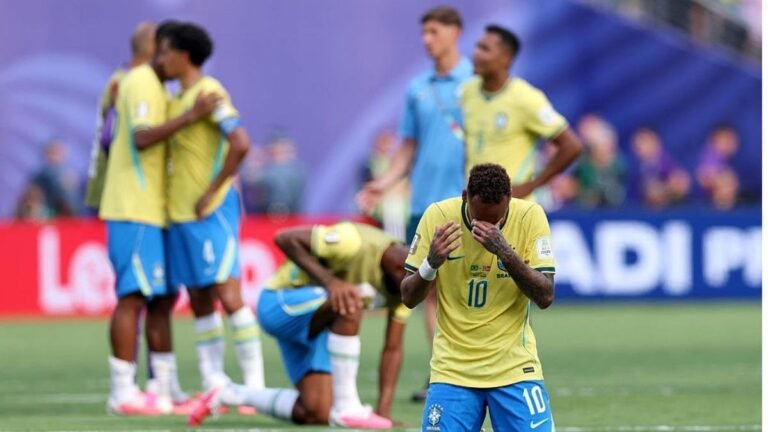
The last glimmer of hope for the Brazil national team was extinguished last Sunday, July 5, with a 2-1 loss to Norway in the Round of 16. The result sealed Brazil’s absence from such an advanced stage of the tournament, something that had not happened since the 1990 World Cup. Despite dominating possession, the team showed crucial flaws, such as the missed penalty by Bruno Guimarães, while Norwegian star Erling Haaland capitalized on his opportunities.
The End of a Cycle for Giants
Brazil’s elimination, led by head coach Carlo Ancelotti, sparked a mix of frustration and criticism regarding the team’s offensive performance. Even with statements that “this is not the end,” but rather the beginning of a new process focused on 2030, the pressure for an overhaul of the Brazilian Football Confederation (CBF) is immense, calling for institutional restructuring after what many consider to be the most disappointing campaign in recent history.
Germany, another giant that boasts four stars on its jersey, also had an early exit. The team was defeated by Paraguay on penalties in the Round of 32, in a match marked by a controversial disallowed goal that drew complaints from head coach Julian Nagelsmann. Meanwhile, Italy, a four-time champion, did not even qualify for the tournament hosted in North America, having been eliminated in the European playoffs by Bosnia and Herzegovina. This marks the third consecutive World Cup without the Italians, highlighting a persistent crisis.
A New Global Landscape
The 2026 scenario deepens a trend already observed at the 2022 Qatar World Cup, where the trio of powers had their worst collective performance. On that occasion, Brazil finished in seventh place, while Germany and Italy did not advance. Now, the simultaneous absence of the three teams from the quarterfinals highlights the notable increase in technical parity between nations. Teams like Morocco and Norway are earning their place in the decisive stages, demonstrating that modern football no longer guarantees absolute dominance for historical names.
Brazil’s farewell, featuring a solitary goal by Neymar, closes a cycle under critical scrutiny. Hope now turns to the future, with the need to rebuild confidence and present a solid project to regain leadership on the world stage. The 2026 World Cup will undoubtedly serve as a watershed moment for Brazilian football and the history of the World Cup itself.
RELATED NEWS
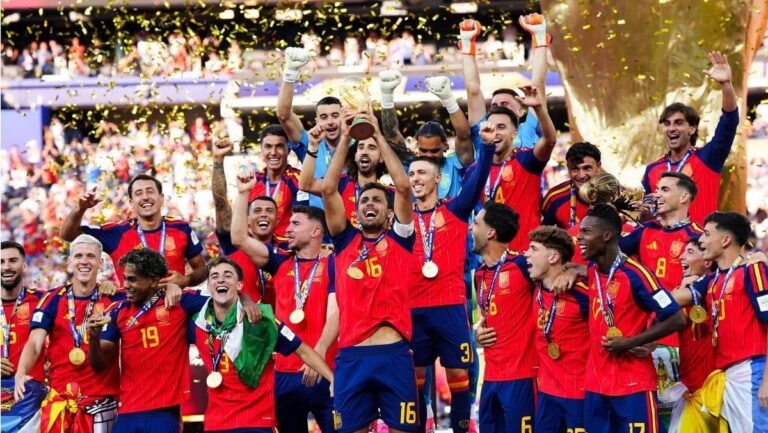 Spain Takes Top FIFA Ranking Spot After World Cup Title Win, Germany Exits Top 10
READ MORE
Spain Takes Top FIFA Ranking Spot After World Cup Title Win, Germany Exits Top 10
READ MORE
 Jorge Jesus reveals behind-the-scenes of near Brazil move and cites preference for Pedro
READ MORE
Jorge Jesus reveals behind-the-scenes of near Brazil move and cites preference for Pedro
READ MORE
 Jorge Jesus: Close to the Brazilian National Team, he was already suggesting players for a preliminary squad
READ MORE
Jorge Jesus: Close to the Brazilian National Team, he was already suggesting players for a preliminary squad
READ MORE