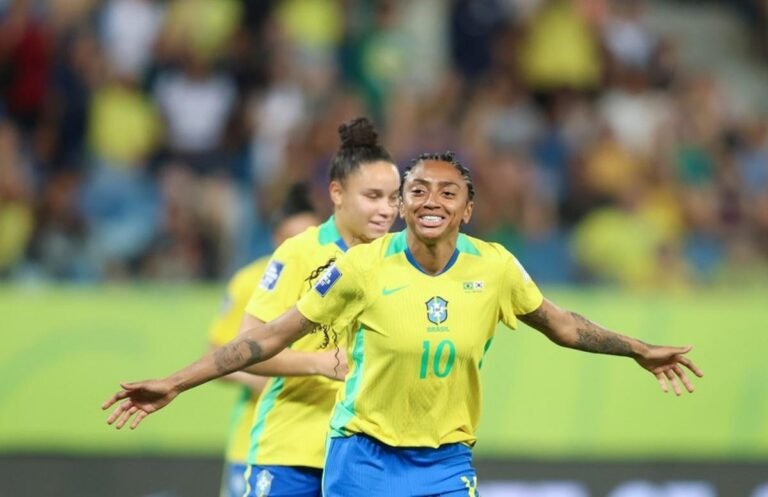


Brazil is preparing to host the 2027 Women’s World Cup, an event poised to be the largest in history, yet one that carries the urgent challenge of overcoming systemic sexism in football.
While the world is buzzing with the excitement of the World Cup in 2026, all eyes are beginning to shift toward our territory. In 2027, Brazil will be the stage for the Women’s World Cup, a unique opportunity to cement the sport as a national powerhouse. However, this optimism is tempered by an uncomfortable reality: the struggle for equality in a sport where women’s prominence must still be fought for, inch by inch, against a long-standing male hegemony.
The contradictory nature of the sport was apparent right at the launch of the Brazilian host bid. The event, which should have been a tribute to women, was overshadowed by excessive homages to male football icons. This episode reflects a recurring pattern: despite progress, sexism continues to shrink the space and visibility of our star players. As we approach the tenth edition of the tournament, the question remains whether we will finally see the respect and appreciation that the talent of our female athletes demands.
Roots of inequality
Disparity in football is not a new phenomenon, but a reflection of decades of neglect. The first official FIFA Women’s World Cup took place only in 1991, in China—61 years after the men’s debut. At the time, the lack of seriousness was so profound that the governing body even limited matches to 80 minutes, based on the fallacious claim that the female body could not withstand the standard full-length duration.
Furthermore, the lack of investment was glaring. While the men’s tournament was already a commercial phenomenon, the 1991 women’s World Cup relied on a single sponsor. The absence of prize money for athletes back then exposes a historical chasm that, despite progress up to 2023, still separates the financial realities of men and women in sports.
Brazilian resistance
The history of women’s football in Brazil is marked by resilience. Between 1941 and 1979, the sport was banned by a decree during the Vargas era, which deemed it incompatible with “female nature.” Athletes were arrested, and the sport was pushed into clandestinity for nearly four decades, surviving thanks to the courage of women who refused to give up on their dream of playing.
Icons like Formiga symbolize this struggle for survival and the delayed regulation, which finally arrived in 1983. Football, which should have been the national passion, remained a hostile territory for a long time, shaped to exclude anyone who dared to challenge the status quo of a sport viewed as exclusively male.
Expectations for 2027
The Brazil of 2027 will be the first South American country to host the world tournament, promising unprecedented infrastructure. With murals already coloring cities like Rio de Janeiro, São Paulo, and Belo Horizonte, the country is dressing up for the spectacle. But beyond the packed arenas, the true test will be social.
The goal is clear: for this World Cup to be a mirror for new generations of girls. As the general expectation among sports fans goes: “The 2027 World Cup must be the definitive turning point where equality ceases to be a talking point and becomes the rule.” If Brazil is truly the land of football, it is time to prove that this passion has no gender and that female leadership is the ingredient that was missing to elevate our sport to the level it truly deserves.