


The potential ban on sports betting in Brazil has sparked a complex debate. Experts from the FIA (Foundation Institute of Administration) examine the economic consequences, risks to football, threats to the retail sector, and the regulatory challenges posed by the betting market.
The sports betting market is facing a moment of uncertainty in Brazil. With the Federal Government evaluating measures to curb rising household debt, the debate over a total ban on betting sites has gained momentum.
Professors at FIA (Foundation Institute of Administration) point out that an abrupt change in the rules of the game could trigger a domino effect, impacting everything from tax revenue to the financial stability of various sectors.
The central discussion is not limited to ethics or gambling addiction. It is a scenario that involves the balance of public accounts, the financial survival of football clubs, and the health of consumer retail.
As the government seeks mechanisms to mitigate social harm, experts warn that the regulatory complexity requires caution to avoid pushing the industry into the shadows.
Fiscal Impact and Public Revenue
The Federal Government‘s economic team is on high alert. A study cited by Folha indicates that a total ban on betting could result in a loss of R$ 12 billion in annual revenue.
This amount, which would otherwise enter public coffers through taxes and licensing fees, would leave a shortfall that would be difficult to cover in the short term.
Transitioning from a regulated market to a definitive ban requires a precise calculation of the decline in economic activity. The question facing policymakers is: how can this revenue loss be offset without further overburdening other sectors of the economy?
Brazilian Football at Stake
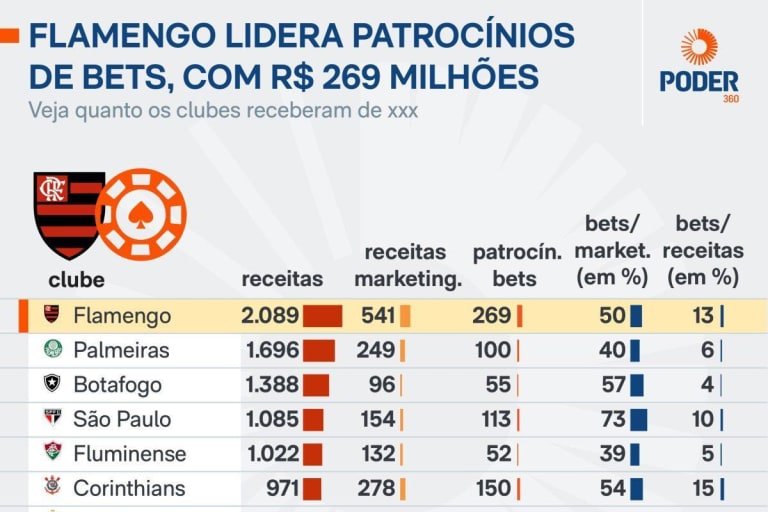
The sports sector is among the most concerned about the possible “end of betting.” Currently, betting companies are the primary source of sponsorship for the majority of clubs in Serie A and lower divisions.
There is a fear that the departure of these investors will cause a liquidity crisis, affecting payrolls and infrastructure investments.
As one expert stated during the debate:
The financial dependence that Brazilian football has created on betting companies is profound; a sudden interruption would require a drastic restructuring across the entire sports sponsorship and media chain.
Risk of Moving Underground
One of the greatest challenges identified by analysts is technology. By severely restricting the formal market, the government may inadvertently drive users toward illegal platforms.
These operators, usually based abroad and without any oversight, offer no consumer protection or payment guarantees.
Migrating to the underground market hinders control over gambling addiction and the protection of Brazilian citizens’ data. Combating illegal betting, therefore, requires much more than prohibition: it demands intelligence, cooperation with the banking sector, and effective methods for blocking financial flows.
Household Debt and Retail
The impact on domestic budgets is undoubtedly the most socially sensitive point. Money diverted to gambling, often sourced from essential spending, leads to a contraction in retail.
When household income is compromised by gambling, supermarkets and general retail stores feel the impact through reduced sales.
The government is now studying legal avenues to hold companies accountable for debts incurred by users. The goal is to create a more robust protection framework. As the analysis highlighted:
The discussion transcends financial regulation and touches on the social responsibility of companies in an ecosystem where the compulsive behavior of the bettor dictates the rhythm of the real economy.
The Future of Regulation
The backlash on social media, which has seen millions of interactions recently, shows that the topic will not leave the political agenda anytime soon. The pressure for a solution that protects the consumer without destroying entire economic sectors places Congress and the Planalto Palace in the eye of the storm.
The outcome of this story must necessarily include a transition phase with greater fiscal and educational rigor. The future of digital betting in Brazil depends on a delicate balance between State revenue, the sustainability of football clubs, and, fundamentally, the financial protection of citizens.