

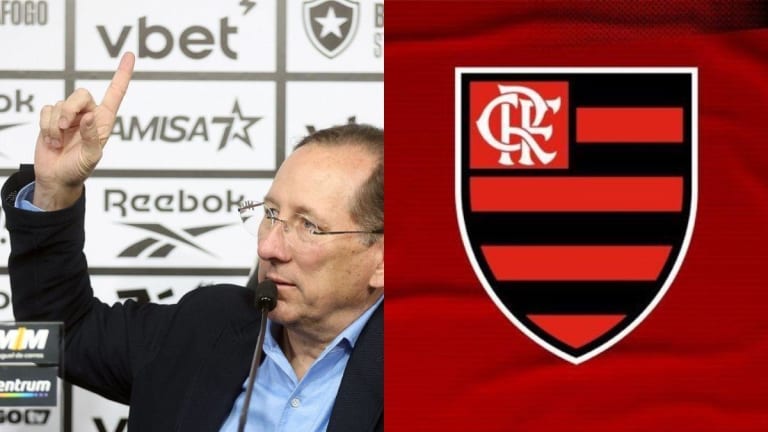
In a recent interview, businessman John Textor ruled out any possibility of investing in Flamengo, explaining that the intense rivalry with the club makes him unwilling to consider such an acquisition.
Temporarily stepping back from his management role at Botafogo’s SAF (corporate football entity), American businessman John Textor opened up about his feelings regarding Brazil’s top clubs. In a statement that resonated with fans, the shareholder categorically affirmed that he would never be interested in acquiring Flamengo, citing the frustration caused by direct clashes on the pitch as the deciding factor behind his stance.
The owner of Eagle Football explained that, upon taking control of the Alvinegro, he absorbed the passion and intensity of local rivalries. According to him, the history of clashes against Mais Querido (Flamengo), Palmeiras, and Fluminense has been the most emotionally challenging aspect of his journey in Brazilian football.
The origin of the friction with the Rubro-Negro
The relationship between Textor and Flamengo has been defined by the Rio-based club’s dominance in recent years. Since Eagle Football took over Botafogo in 2022, the Gávea-based club has secured ten victories in direct matchups, compared to only four wins for the Alvinegro and one draw. One of the defining moments of this imbalance was Flamengo’s 2025 Supercopa Rei victory over the team led by the American.
“Flamengo, Palmeiras, Fluminense… These were the only clubs that truly got under my skin. I have love and respect for all teams in Brazil, but the rivalries affected me because I adopted Botafogo as my own club,”Textor stated in an interview with ESPN.
Context regarding the SAF management transition
Textor’s temporary withdrawal from direct activities at Botafogo is not limited to sporting issues. The decision was made by Eagle Football itself in light of administrative tensions. Disagreements over corporate maneuvers and a controversial request for judicial restructuring created instability, sparking protests from shareholders and fans.
In addition to internal conflicts, management is facing external pressure, including penalties from FIFA. The club was hit with a transfer ban due to late payments to Atlanta United, from the United States, regarding the signing of midfielder Thiago Almada. This series of issues, combined with inconsistent performances in classic matches, has forced the board to reflect on the future of the project for upcoming seasons.