

Brazil has mapped out a strategic path for the 2026 World Cup! By facing Japan, the Brazil national team has a bracket designed to avoid third-place teams and balance their pursuit of a sixth title.
The 2026 World Cup is approaching, bringing not only the novelty of being hosted by three countries but also an expanded format featuring 48 teams. This expansion radically changes the competition’s design, especially in the knockout stage, where the Brazil national team, having qualified as group winners, already knows part of its destiny. What is surprising, and should fill passionate fans with hope, is the path laid out for Brazil, which keeps them away from matches against third-place teams right from the start.
This scenario is not a coincidence but the result of an ingenious bracket architecture devised by FIFA. The Brazil national team will face Japan, the runner-up of Group F, in the second round of the World Cup, in a dynamic different from that which some other group winners will experience. It is the assurance that the pursuit of the ‘Hexa’ begins with a direct challenge against a team that showed consistency in advancing, but without the “mystery” of a third-place opponent.
New Format and the Bracket Intrigue
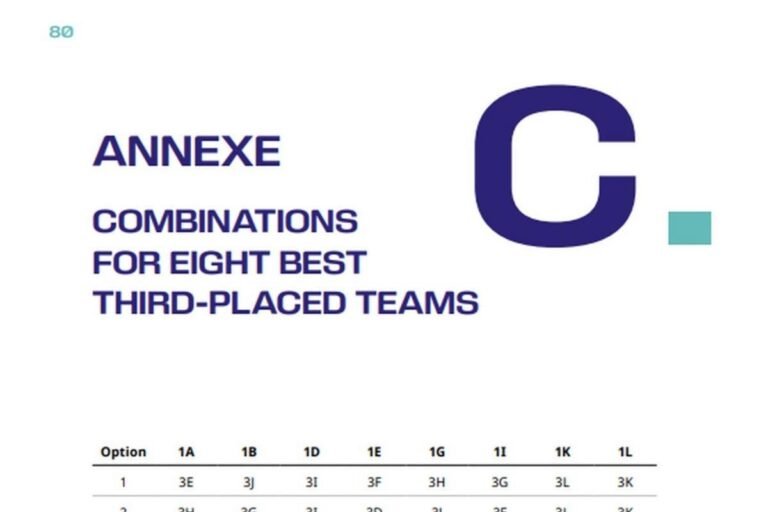
The new 2026 World Cup regulations, with its 48 teams, dictate that some group winners will face the best third-place finishers. This measure is intended to provide more opportunities and excitement to the group stage but raises questions about the balance of the knockout rounds. However, the path for Brazil, leaders of Group C, follows a specific logic, designed to protect and stabilize the trajectories of the top teams from the beginning.
The National Team’s Strategic Route
FIFA has established a “lock” in the bracket. The winners of groups A, B, D, E, G, I, K, and L will indeed have the chance to face the best third-place teams. However, for the winners of groups C (where Brazil is located), F, H, and J, the rule is clear: the opponent will be a team that finished in second place. This differentiation has a primary objective: to balance the difficulty of the paths and avoid early reunions between teams from the same group, maintaining the suspense of the competition.
The Knockout Path: Japan and Beyond
In practice, the match against Japan, the runner-up of Group F, positions Brazil on a side of the bracket that favors duels between second-place teams. Advancing, the Brazil national team will face the winner of the clash between the runners-up of groups E and I in the Round of 16. This structure is fundamental, as it ensures that the Brazil national team does not cross paths with another group winner in the early stages of the knockout round, preserving balance and unpredictability for the later stages.
This bracket strategy could be decisive in Brazil’s journey toward the dream of a sixth title. Avoiding a confrontation with a third-place team and, especially, with other group winners in the early phases means a “cleaner” path and, theoretically, progressively greater challenges as the national team advances. It is a bet on the strength and talent of Brazil, as they prepare to write another glorious chapter in their history of determination, love, and passion for football.