
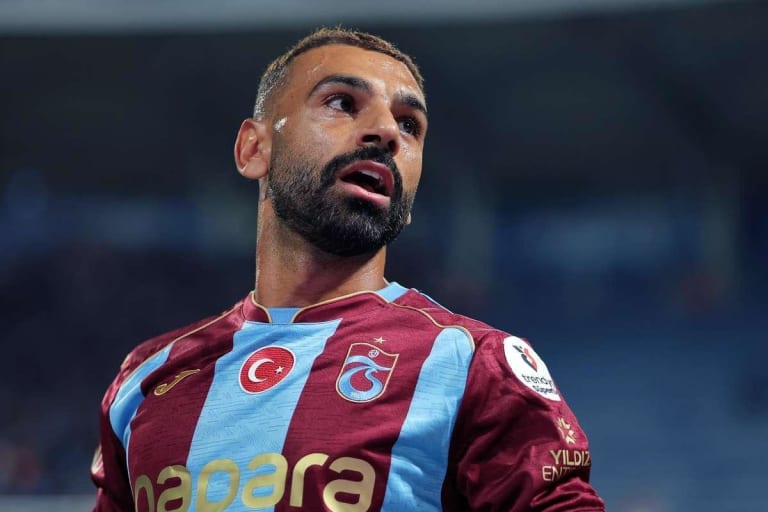
Turkish football is emerging as an attractive destination for global stars, offering net salaries and the promise of clubs covering all taxes. A continuous trend that is redefining the European landscape.
Activity in the European transfer market points to a remarkable rise of the Süper Lig, the top tier of Turkish football, as a hub for major names in the sport. The recent interest from Galatasaray in Brazilian forward Gabriel Martinelli of Arsenal, with a bid reportedly reaching 45 million euros (approximately R$ 269 million), illustrates the financial power and ambition of Turkish clubs. This scenario is reinforced by the arrival of multiple stars leaving major leagues in search of new opportunities and distinct financial terms.
The most relevant point of this trend lies in the financial strategy adopted by Turkish clubs. In addition to offering high amounts, teams often negotiate salaries in net terms, assuming responsibility for tax obligations. This approach eliminates the players’ concern regarding future deductions, making the offers financially more advantageous and straightforward. The arrival of Mohamed Salah at Trabzonspor, for example, following his departure from Liverpool, is a landmark of this new reality, with the Egyptian player securing substantial net earnings.
Attractive Financial Models
Players transferring to Turkey frequently sign contracts with tax-free salaries. This structure, where clubs handle tax burdens, represents a significant differentiator. In the case of Mohamed Salah, his contract with Trabzonspor ensures a net salary of 17 million euros (about R$ 100 million) per season, a figure that even surpassed the interest of clubs from Saudi Arabia.
Stars Migrate to Turkey
The current transfer window highlights a strong push by Turkish teams to acquire recognized talent. Besides Salah, Belgian forward Romelu Lukaku moved from Napoli to Fenerbahçe. The same destination was chosen by N’golo Kanté, who joined the club following a stint at Al-Ittihad, in Saudi Arabia. Besiktas, in turn, secured the signing of Serbian striker Dusan Vlahovic, who will receive 7.5 million euros (about R$ 45 million) per year.
Contrast with the Saudi Market
The trend in Turkish football demonstrates a more consolidated and continuous strategy compared to the boom in Saudi Arabia. While Saudi clubs, driven by the Public Investment Fund (PIF), have attracted mega-stars like Cristiano Ronaldo, Neymar, and Benzema, the Turkish market has shown the ability to retain talent and add new names, such as Leroy Sané and Victor Osimhen, both at Galatasaray. Saudi Arabia, meanwhile, has seen less high-profile players leave the country upon the expiration of their contracts.
A Tradition of Attracting Experience
Historically, Turkey was already a sought-after destination for athletes from European leagues seeking a new chapter in their careers. Names like Dirk Kuyt and Robin van Persie, who joined Fenerbahçe after spells with Liverpool and Manchester United, respectively, are examples. Galatasaray received Wesley Sneijder from Inter Milan and Mauro Icardi from PSG. Besiktas featured Pepe, formerly of Real Madrid, and Ricardo Quaresma, formerly of Porto, solidifying Turkey‘s image as a safe harbor for experienced talent.
Financial Challenges and Creative Solutions
Despite the high salaries and tax compensations, the financial health of top Turkish clubs like Galatasaray, Fenerbahçe, Besiktas, and Trabzonspor presents challenges. The debt accumulated by the four teams exceeds the 1 billion euro mark (about R$ 6 billion), requiring robust cash flow to cover the high costs. Galatasaray, for instance, sold the land of its training center to the Istanbul Municipality, generating 400 million euros (R$ 2.4 billion) for its coffers.
Fenerbahçe relies on the support of investors, including former president Ali Koc, whose family is among the wealthiest in Turkey. The club also excels in developing and selling young prospects, such as Arda Guler, who was sold to Real Madrid for 28 million euros. At Trabzonspor, Salah‘s salary is facilitated through strategic sponsorships with partners like Turkish Airlines and the electric car manufacturer Togg, demonstrating the search for alternative revenue sources.
The growing influence of Turkish football is underscored not only by the attraction of stars but also by international recognition. The country was chosen to host the 2027 Spanish Super Cup, a tournament that will bring together giants such as Barcelona, Real Madrid, Atlético de Madrid, and Real Sociedad. This decision, which moves the event from Saudi Arabia temporarily due to scheduling conflicts, reinforces Turkey‘s ability to host major sporting events and solidifies its position on the global football stage. The strategy of offering advantageous financial terms, added to organizational capability and the presence of renowned players, paints a promising future for the Süper Lig.
M360 Team