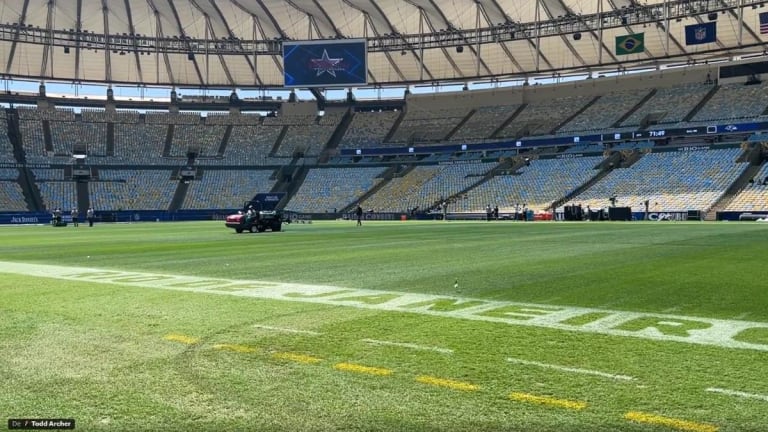



The World Cup in Texas is implementing no-weapons notices at its venues, a stark contrast in a state known for its gun-carrying freedom, aiming to ensure fan safety and private property control.
The biggest celebration of global soccer is arriving in Texas, bringing with it a reality that challenges local culture. In a state known for its extreme permissiveness regarding gun carrying, World Cupstadiums and Fan Fests are now displaying signs prohibiting the entry of weapons. This peculiar scenario, where the passion for the sport meets complex American gun laws, adds a crucial layer of discussion about security and property at a global event.
The measure, already common in private Texan establishments such as banks and museums, gains special prominence in the context of a global event like the World Cup. Cities like Houston, where the Brazil national team might play in the second phase, and Arlington, are preparing to welcome thousands of fans, and the presence of these signs becomes a symbol of the quest for a safe environment amidst a deeply rooted gun culture.
Complex Texas Law and Private Property
The signage at World Cup venues in Texas, based on articles 30.06 and 30.07 of the Texas Penal Code, does not directly oppose gun ownership itself. The focus is on “armed trespass on private property.” This approach reflects a legislative change five years ago, which eliminated the requirement for a License to Carry (LTC) for most citizens. Property owners, therefore, exercise their right to prohibit the presence of weapons on their premises, using the law to do so.
The Fundamental Debate Between Rights
Criminal lawyer Marcos Vinícius da Silva Paladini highlights the core of this issue. According to him, the notices represent “the debate between the right to carry arms and the absolute right to private property.“ In other words, anyone who ignores the prohibition commits an offense against the property owner’s assets, and not directly against public safety. This mechanism allows the flexibility of gun policy to coexist with control exercised by private entities.
A ‘free’ gun policy can only socially survive if it is accompanied by a strong mechanism of private exclusion.
Paladini states, emphasizing that the signs serve as “legal shields” for property owners, who need more legal power as access to weapons becomes easier.
Legal Contrasts: Brazil Versus Texas
The Texan reality contrasts sharply with Brazilian legislation. In Brazil, the Disarmament Statute, in force since 2003, treats gun possession and carrying as an exception, not the rule, and does not link the issue to property rights. Our legislation prioritizes public safety more broadly, in contrast to the Texas approach, which delegates part of the control responsibility to private property owners.
The Warning from Gun Violence Statistics
Despite the freedom to carry weapons, Texas faces a worrying increase in crimes involving firearms. Data from the Department of Public Safety (DPS) indicates a surge in arrests for firearm-related crimes, especially from 2014 onwards, reaching a peak in 2022. Although there has been a slight reduction in recent years, the average number of arrests and convictions remains high, highlighting the public safety challenges the state faces.
Mass Shootings: A Harsh Reality
The shadow of gun violence is a constant in Texas. The Gun Violence Archive organization documents dozens of mass shootings annually in the state. Cities far from the World Cup’s spotlight, such as Midland, have already felt the devastating impact of these events, which claim lives and paralyze communities. The presence of such warnings at the World Cup is not merely a legal formality but a tacit acknowledgment of the need to reinforce security at large-scale events.
The World Cup in Texas, therefore, is shaping up not only as a celebration of soccer but also as a stage for crucial discussions about security, freedom, and the intrinsic debate surrounding gun carrying. FIFA and local authorities aim to ensure the safety of fans and athletes, especially during large gatherings, such as the Brazil national team’s matches in Houston. The challenge is to reconcile the passion for the sport with the complex and sometimes dangerous reality of a state where guns are seen, by many, as a fundamental right. The expectation is that, with these measures, the celebration of soccer will prevail over any security concerns, ensuring that “Raça, Amor e Paixão” are the only “shots” allowed on Texan fields.