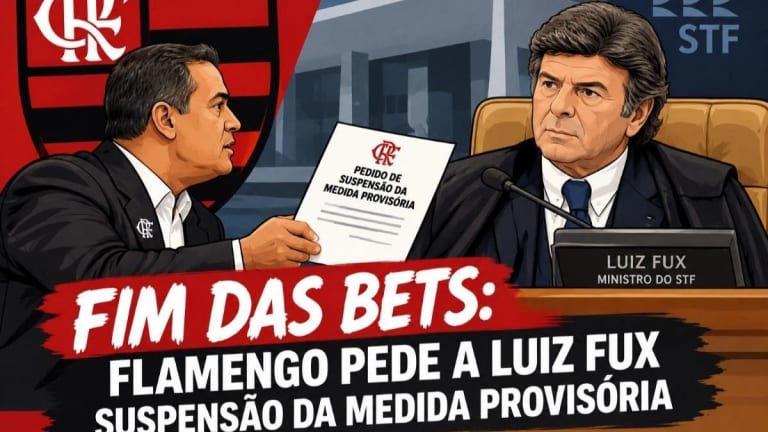


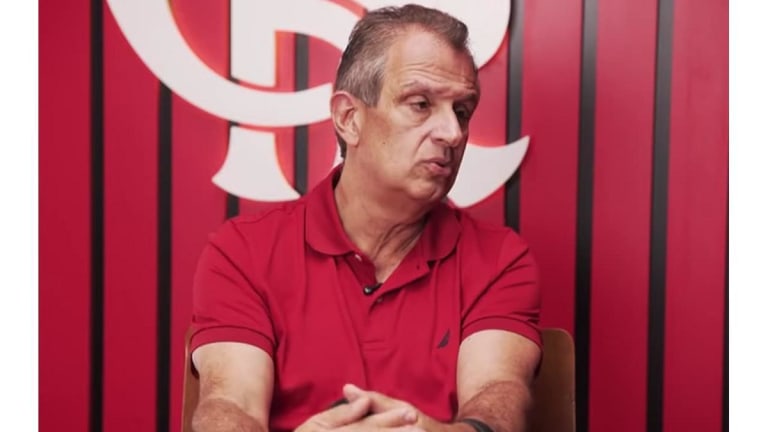
Flamengo led a legal offensive in the Supreme Federal Court alongside 18 other clubs against the ban on sports betting sponsorships, aiming to avoid billions in losses and save crucial contracts for the future.
Brazilian soccer is experiencing intense legal and financial tension behind the scenes. Flamengo took center stage in an unprecedented national effort by appealing to the Supreme Federal Court to challenge the ban on sponsorships from betting companies, established by Provisional Measure No. 1,394.
The Rubro-Negro offensive quickly echoed across the country, turning into a united front that brought together 17 other clubs from various divisions of the Brazilian Serie A and lower leagues. The severity of the situation united even historic rivals in an attempt to block the measure’s effects before the deadline set by the government.
The Weight of the Rubro-Negro’s Losses
For Mais Querido, the potential loss exceeds R$ 400 million, directly threatening the club’s financial planning. The contract with Betano, which injects R$ 268 million per season, accounts for about 15% of the Rio club’s entire annual revenue.
According to an assessment by the board led by Luiz Eduardo Baptista, there is currently no alternative on the market capable of filling this gap immediately. Beyond the main shirt sponsorship, the club would face the obligation to return around R$ 70 million in advance payments and deal with the collapse of secondary commercial agreements.
Domino Effect on Financial Commitments
The financial instability generated by the measure directly threatens the Rubro-Negro’s operations in the transfer market. Among the management’s main concerns is making the second installment payment for the purchase of Lucas Paquetá, scheduled for January 2027 and valued at approximately R$ 100 million.
With a recent accounting deficit and tight operating margins, the board argues that the sudden ban makes fulfilling long-term contracts unfeasible. The soccer team risks losing international competitiveness unless the legal situation is urgently reversed.
Club Unity and the Deadline
The petition filed by Mengão as amicus curiae opened the door for teams such as Fluminense, Botafogo, Cruzeiro, Goiás, and 14 other clubs to also join the action before Justice Luiz Fux. The mobilization demonstrates that the financial impact is not restricted to the elite level of the sport.
At the same time, the National Gaming and Lottery Association filed an urgent request demanding a decision from the high court by the end of next Monday. The entity stresses that funds from betting companies finance not only soccer teams, but also the Brazilian Olympic Committee and several socially significant institutions.
The outcome of this legal battle in the Supreme Federal Court will define the economic direction of national sports for years to come. For Flamengo and its allies, the judicial ruling represents the fine line between financial stability and an unprecedented structural collapse.
M360 Team