
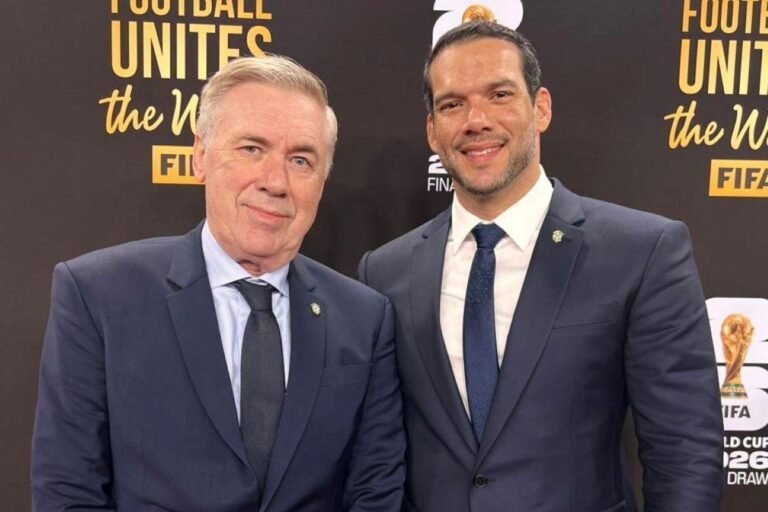
Ancelotti, despite an early exit from the World Cup, maintains one of the highest salaries in world football, surpassing the combined earnings of the tournament’s finalist coaches.
The Brazil national team, under Carlo Ancelotti‘s guidance, is experiencing a financial paradox that lingers even after its premature elimination in the Round of 16 of the last World Cup. Despite the performance falling short of expectations, the Italian coach remains at the top of the global football salary pyramid, earning an impressive annual amount that sparks debate. This scenario, far from being just a statistic, reveals an investment strategy and extremely high expectations placed on the five-time champions.
The news isn’t just about Ancelotti‘s high salary, but the vast gap separating his earnings from those of the coaches who actually led their teams to the final of the biggest football tournament. It’s a stark contrast that puts into perspective the cost-benefit analysis and the CBF‘s belief in a long-term project with the renowned coach, whose contract extends until the 2030 World Cup.
The Salary Giant and On-Field Performance
Carlo Ancelotti, with his international prestige and enviable track record, receives an impressive 10 million euros annually from the Brazilian Football Confederation, equivalent to approximately R$ 58.2 million. This figure not only positions him as one of the highest-paid coaches globally but also reflects the Brazilian entity’s bet on his experience and ability to restructure the team. The expectation was a revival, but the early elimination inevitably raised questions.
Comparison with World Cup Finalists
The impact of Ancelotti‘s compensation becomes even more evident when compared to the salaries of Luis de la Fuente, coach of Spain, and Lionel Scaloni, manager of Argentina. Combined, the annual earnings of the two finalists of the last World Cup don’t even reach half of what the Italian takes home each year. Luis de la Fuente, champion of the 2026 World Cup and Euro 2024, earns 2 million euros per year (approximately R$ 11.7 million), an amount that, despite tripling after the continental title, remains modest compared to the Brazilian standards for Ancelotti.
Meanwhile, Lionel Scaloni, who led Argentina to the runner-up position in 2026 and boasts the title of the 2022 World Cup and two Copa América titles, earns 2.3 million euros annually, around R$ 13.5 million. This comparison highlights a reality where the CBF‘s investment in Ancelotti is substantially greater than that made by federations that reached the pinnacle of the world competition.
Trajectory and Future Expectations
Carlo Ancelotti‘s arrival to lead the Brazil national team was met with immense optimism, fueled by a career brimming with glory in European football. The coach has won five Champions League titles and championships in various national leagues, including Italy, England, Germany, Spain, and France. This winning history partly justifies the CBF‘s high investment, as they see Ancelotti as the key piece to put Brazil back on the path to major triumphs.
Despite the recent disappointment in the World Cup, the Italian coach’s contract until 2030 signals a long-term commitment. The CBF appears willing to maintain the structure and give Ancelotti time to implement his philosophy and ultimately deliver the expected results. The nation awaits for the passion and investment to translate into performance and, consequently, titles that match the grandeur of Brazilian football. The journey to the next World Cup promises to be intense, with the watchful eyes of fans and the press on every step of the ‘Amarelinha’.
RELATED NEWS
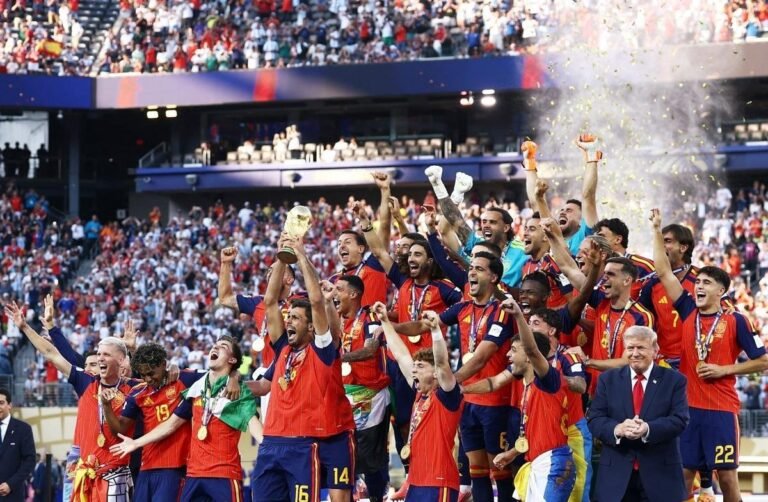 Spain Leads FIFA Ranking After World Cup Title; Brazil Climbs Despite Elimination
READ MORE
Spain Leads FIFA Ranking After World Cup Title; Brazil Climbs Despite Elimination
READ MORE
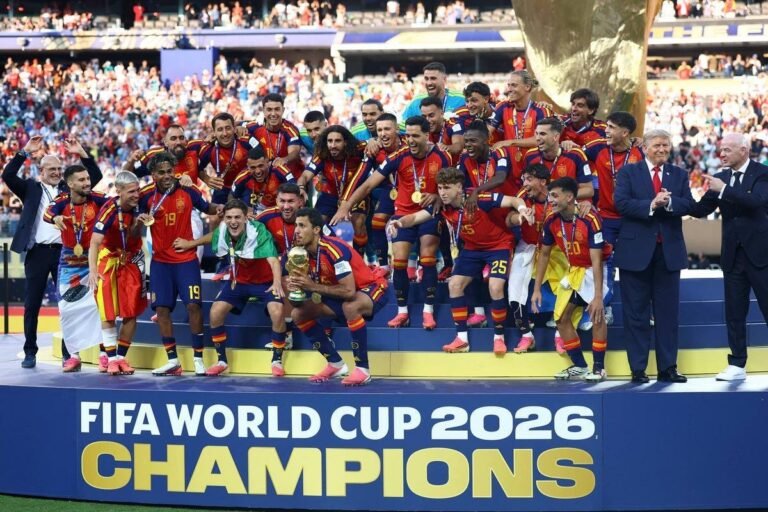 Controversy and Political Influence Mark 2026 World Cup, Leaving Uncertain Legacy for Football
READ MORE
Controversy and Political Influence Mark 2026 World Cup, Leaving Uncertain Legacy for Football
READ MORE
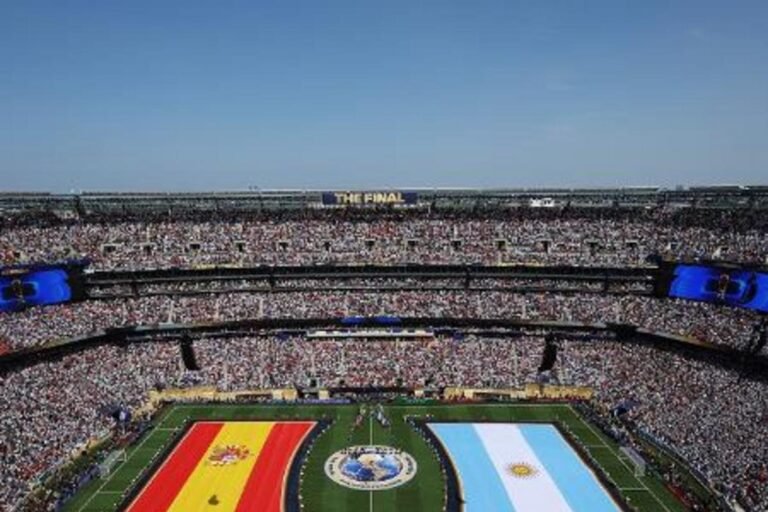 2026 World Cup Generates $15 Billion for FIFA, Sees Record Attendance, and Shoots Down 700 Drones
READ MORE
2026 World Cup Generates $15 Billion for FIFA, Sees Record Attendance, and Shoots Down 700 Drones
READ MORE