

CBF shifts stance on national team injuries after Neymar controversy, prioritizing player privacy and sparking debate.
The Brazilian Football Confederation (CBF) has implemented a significant change in its communication protocol regarding injuries to Brazil national team athletes during the 2026 World Cup. From now on, the organization will no longer disclose details about the severity or recovery timelines, a change that has sparked discussions and raised questions about transparency in sports. According to the CBF, this new approach aims to protect players and focus on their recovery.
This new guideline emerges as a direct response to a controversial episode involving forward Neymar at the start of the tournament. On that occasion, there was a clear “clash of versions” between the medical department of Santos, the player’s club, and the confederation itself, generating a heated debate about the star player’s actual physical condition.
The Neymar Incident and the CBF’s Turning Point
The controversy with Neymar was the trigger for this reevaluation. While Santos downplayed the forward’s injury, classifying it as a minor issue, examinations conducted by the CBF revealed a more serious scenario: a Grade 2 calf muscle injury. This discrepancy exposed a fragility in communication and information management.
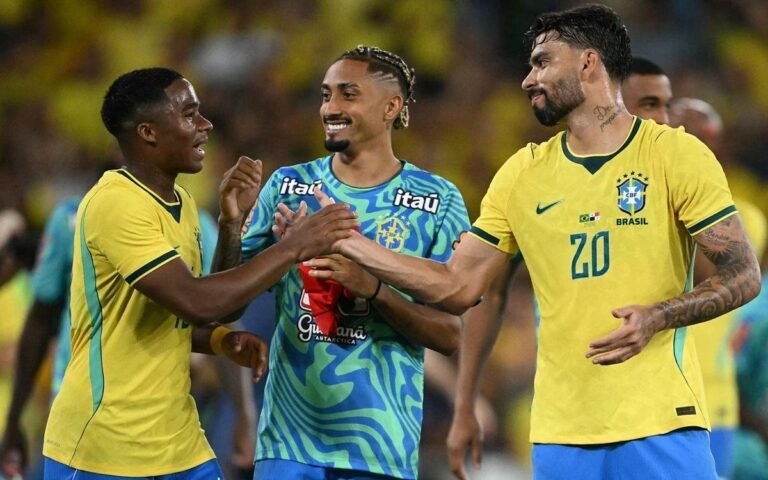
Currently, the CBF‘s official communication regarding injuries, such as those of Raphinha and Lucas Paquetá, follows a strict standard. Statements are generic, limited to informing the type of muscle injury and the initiation of an intensive treatment protocol, without delving into clinical details.
Reduced Transparency for the Sake of the Athlete?
When questioned about the sudden change, the entity reiterated that the decision to omit the degree of injuries and estimated return times has the primary objective of “preserving the athletes” during the complex recovery process. This justification, although understandable, contrasts drastically with the transparency stance adopted in the past.
In previous instances, such as Neymar‘s injury, doctor Rodrigo Lasmar meticulously detailed the diagnosis and recovery outlook. Today, information regarding the severity of injuries to players like Lucas Paquetá reaches the public through their respective clubs, and no longer directly from the confederation.
The CBF‘s new policy, focused on player preservation and privacy, represents a watershed moment in how the Brazil national team manages and communicates crucial information about the physical condition of its talents. While this approach aims to protect the players, it could also fuel speculation and distance fans from information that, for many, is essential to closely follow the performance and future of the Brazil national team. The Seleção‘s upcoming challenges on the road to the 2026 World Cup will undoubtedly test the effectiveness and acceptance of this new era of communication.