

The Brazilian transfer market records a sharp 61.7% drop in investments, signaling the end of an era of million-dollar signings and imposing financial challenges on Serie A clubs.
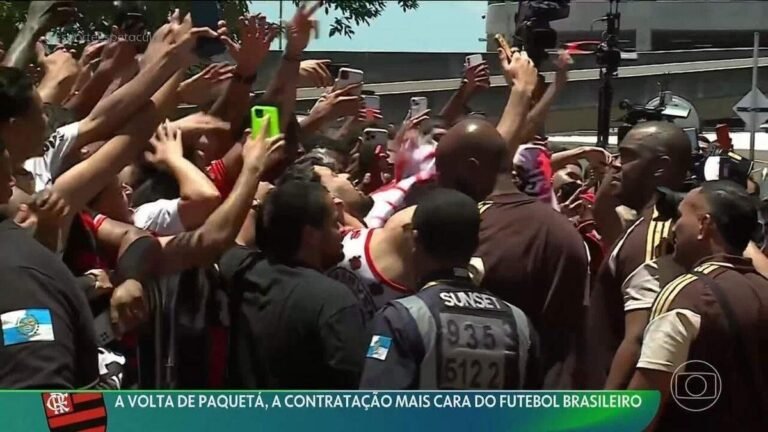
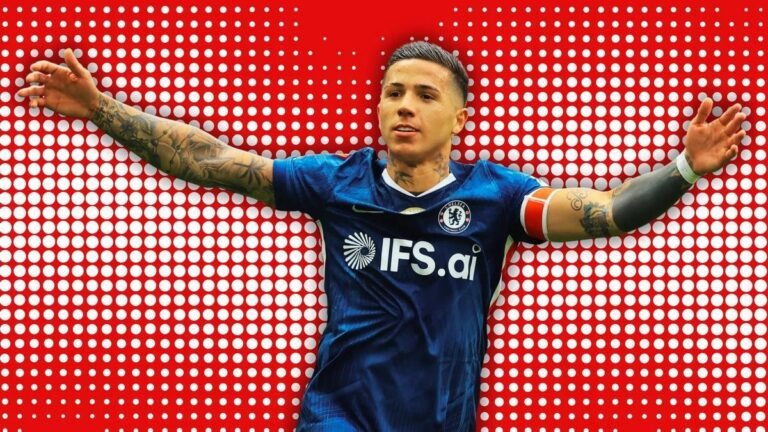
The period of record signings and the arrival of big names, such as Dutch national team forward Memphis Depay and midfielder Lucas Paquetá, a former standout in the wealthy Premier League, appears to have come to an end in Brazilian football.
The current transfer window reveals a more restrained approach, far from the abundant spending seen in previous seasons.
As of last Friday (14), the twenty Serie A clubs invested a total of 80.2 million euros (equivalent to R$ 486.4 million) in new players.
This amount represents a significant 61.7% decrease compared to the record 209.5 million euros (nearly R$ 1.3 billion) registered in the same period last year.
The situation signals a drastic change in the behavior of the national transfer market.
Drop in Investments and Frustrated Expectations
Although the transfer window in Brazil extends until September 11, indications suggest a transaction volume that is unlikely to recover.
Clubs with greater financial power, such as Flamengo and Palmeiras, already appear to have concluded their dealings without securing their most desired reinforcements, highlighting the new reality.
Palmeiras, for example, failed to convince Botafogo to release midfielder Danilo Santos, a product of their own youth academy.
Flamengo, in turn, saw Thiago Almada go to River Plate and deemed the price requested by Zenit Saint Petersburg for Luiz Henrique to be excessive.
Transfer Bans Hit National Giants
The situation worsens for other national powerhouses.
Teams like Corinthians, Santos, and São Paulo face restrictions due to transfer bans or are under threat of being prevented from registering new players.
Such prohibitions stem from their inability to settle debts related to previous transactions, adding a layer of complexity to club planning.
The Spending Bubble Begins to Burst
According to Amir Somoggi, director of Sports Value consultancy and a sports marketing specialist, the current scenario is the result of a “bubble” that formed in recent years.
“What happened in recent years is that we lived in a bubble, which apparently started to burst. It hasn’t burst 100% yet, but [the values] have significantly reduced because they were so high.”
He explains that Flamengo and Palmeiras, by heavily reinvesting profits from player sales into more expensive reinforcements, inflated the market.
Other clubs, in an attempt to keep pace, ended up in debt.
The Role of SAFs and Dependence on Player Sales
The rise of SAFs (Sociedades Anônimas do Futebol), such as Atlético-MG, Bahia, Botafogo, and Vasco, also contributed to this artificial growth.
These entities injected resources that were not part of the clubs’ original budgets, coming directly from their owners’ accounts.
“It was an artificial growth movement for Brazilian football. One thing is certain: Brazilian clubs are extremely dependent on player sales. When they sell, they have money to sign new players. As long as we don’t grow substantially in recurring revenues, marketing, memberships, international rights, we will always be stuck in this unsustainable flight.”
The current mid-year transfer window stands out for its expressive drop compared to previous years.
In 2025, the investment was 209.5 million euros, and in 2024, 195.4 million euros.
The current value of 80.2 million euros for 2026 so far is in line with 2022 levels (82.1 million euros), but significantly below the recent peak.
The retraction in investments and the restrictions imposed by transfer bans outline a challenging future for Brazilian football.
The need to reevaluate financial strategies and seek more sustainable revenue sources becomes imperative.
This scenario may force clubs into more cautious planning, prioritizing talent development and responsible fiscal management at the expense of high-cost signings.
Such measures impact the competitiveness and dynamics of the upcoming editions of the Brazilian Serie A.
Equipe M360