

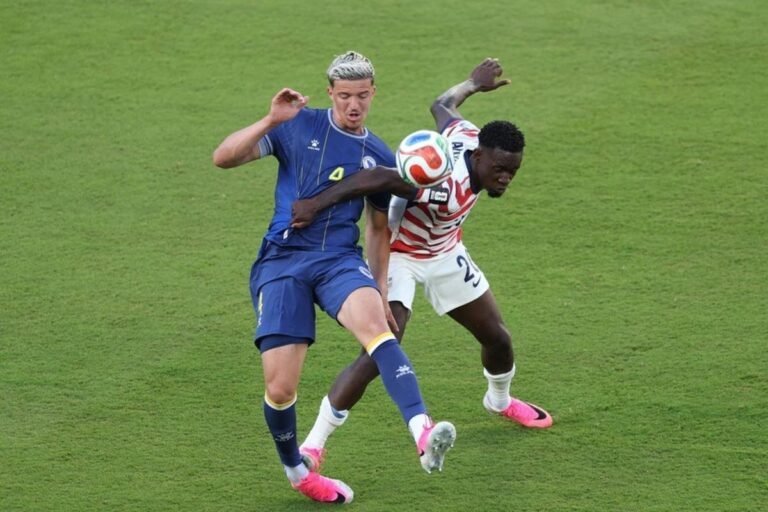
The controversial clearance of forward Folarin Balogun for the 2026 World Cup round of 16 has sparked outrage in Belgium and put FIFA‘s transparency in question.
Tensions are rising behind the scenes at the 2026 World Cup. On the eve of the decisive clash between Belgium and the United States, scheduled for this Monday, the Royal Belgian Football Association (RBFA) has publicly expressed its outrage. The reason is the annulment of the suspension of Folarin Balogun, the American forward who had been sent off in the previous stage against Bosnia.
FIFA‘s decision, which allowed the player to return to the starting lineup, caused a diplomatic earthquake in the tournament. While rumors are swirling behind the scenes about possible political interference involving the American government, Belgium vows not to let the situation go unaddressed, alleging that the regulations were disregarded to favor the host team.
The Conflict of FIFA Regulations
The RBFA bases its complaint on a blatant contradiction within the organization’s code. Although FIFA invoked Article 27, which allows for the suspension of disciplinary sanctions, the European federation counters with the strictness of Article 66.4 and the competition’s own regulations.
“Article 66.4 of the same FIFA Disciplinary Code clearly stipulates that a red card (expulsion) automatically results in suspension for the team’s next match, as has occurred in all previous red card incidents in this World Cup.”
A Stain on Fair Play?
The incident that caused the controversy was a hard stomp on an opponent’s ankle, flagged by Brazilian referee Raphael Claus with the assistance of VAR. At the time, the refereeing leadership itself had validated the decision as technically correct. FIFA‘s sudden change in stance, just days before the round of 16 clash, raises serious questions about the influence of political lobbying in decisions that should be purely sporting.
Belgium emphasizes that the automatic nature of the suspension was reiterated in various circulars and preparatory workshops for the World Cup. For the Belgian federation, the measure not only favors the U.S. but also violates the principle of equality among competitors.
Outlook for the Match
Now, the clash between the Belgians and Americans takes on the character of a “war” off the field. With Balogun‘s presence confirmed, Belgium continues to analyze legal and procedural measures to safeguard its rights. It remains to be seen whether the impact of this legal imbroglio will affect the players’ focus on the field, or if the spirit of “grit, love, and passion” will prevail on the pitch, despite the legal challenges. The football world watches closely: will fair play be preserved, or will politics dictate the champion?