

Despite the early elimination from the 2026 World Cup, MLS reaffirms the potential of the United States as one of the largest soccer markets on the planet.
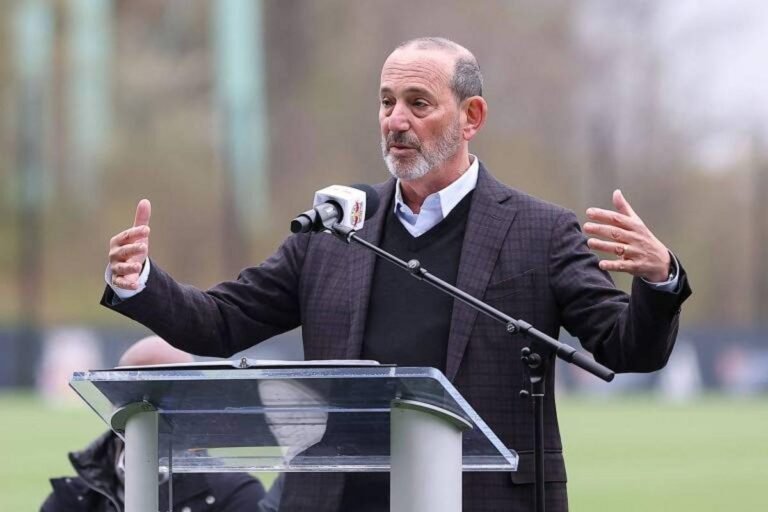
Although the United States national team didn’t reach the heights fans dreamed of at the World Cup, optimism surrounding the sport in the country is at its peak. For Don Garber, commissioner of Major League Soccer, the tournament served as definitive proof that American soil is a true “golden market” for global soccer.
In a recent interview, the executive highlighted that the event surpassed all goals, both in fan engagement and organization, solidifying soccer’s place once and for all in the mainstream U.S. sports landscape. The reflection of this could be seen on television: the American elimination to Belgium broke records, becoming the most-watched soccer match in the country’s TV history.
Strategy for the Future
The impact of the 2026 World Cup was the trigger MLS needed to accelerate its plans. With the campaign ‘Thank You, World, We’ll Take It From Here,’ the league aims to convert casual viewers into loyal fans of local clubs. One of the boldest steps will be a calendar change: starting in 2027, the season will adopt the European standard, facilitating player transitions and alignment with the international transfer market.
‘This is the golden market for soccer globally,’ stated Garber. With investments already exceeding 11 billion dollars in infrastructure and 30 franchises spread across the territory, the league wants to prove that the country is not just a temporary stop for aging stars, but a solid and competitive ecosystem.
Challenges and the Next Step
Not everything, however, is positive. The commissioner admits that the athlete development system needs to evolve. The old ‘pay-to-play’ model is still a barrier to the development of young talent and limits access to the sport for many communities. To combat this, MLS is betting on the expansion of MLS Next Pro, joining forces with strategic partners like KKR to bring professional soccer to more than 100 cities that don’t yet have clubs.
Although European giants continue to attract American attention, Garber‘s vision is optimistic. For him, interest in international soccer — such as Erling Haaland‘s success — doesn’t cannibalize MLS. On the contrary: the passion for the game is creating an environment where fans can follow their European club in the morning and experience an unforgettable game at their local team’s stadium in the afternoon. Soccer, finally, has put down deep roots in the land of Uncle Sam.