

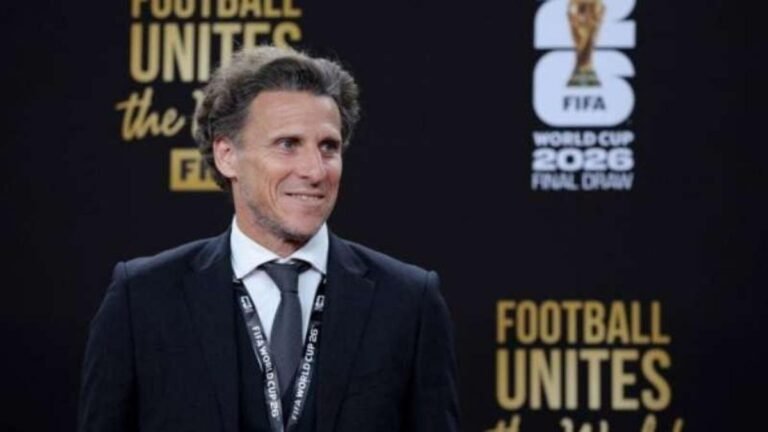
The Uruguay national team begins a new chapter with Diego Forlán at the helm. The club legend takes over as interim manager following the departure of Marcelo Bielsa.
Uruguayan football is undergoing a period of profound renewal. Following an underwhelming run in the 2026 World Cup, the Uruguayan Football Association (AUF) officially announced the departure of Marcelo Bielsa and almost immediately turned to one of its greatest icons to lead the squad: Diego Forlán.
The choice of Forlán, who embodies the spirit of the ‘Celeste’ jersey, has brought a fresh sense of optimism to the fans. The former striker, who had a notable stint at Internacional, accepted the challenge of leading the team during a time of political transition within the country’s football governing body.
The leadership transition for La Celeste
The AUF‘s decision to opt for an interim arrangement until March 2027 is strategic. With elections scheduled for later this year, the board prefers that the permanent head coach be selected once the new management is in place. Ignacio Alonso, president of the organization, emphasized that the partnership with the former player did not happen overnight.
“Back in 2022, we had already spoken with Diego about being involved in the national team project. Now, the opportunity arose, and he accepted the challenge with great enthusiasm,” the executive stated.
Forlán’s challenges and responsibilities
Beyond the natural pressure of managing the senior national team, Diego Forlán faces an intense workload. He will be responsible for the 2030 World Cup Qualifiers, in addition to a series of friendly matches that will serve to test new players for the roster.
Forlán will also keep a close eye on the youth ranks, taking charge of the U-20 team for the South American Championship, which takes place in January 2027. Having previously managed Peñarol and Atenas de San Carlos, the Uruguayan idol now looks to solidify his coaching career, bringing all of his championship pedigree to help rebuild La Celeste‘s strength on both the continental and global stages.