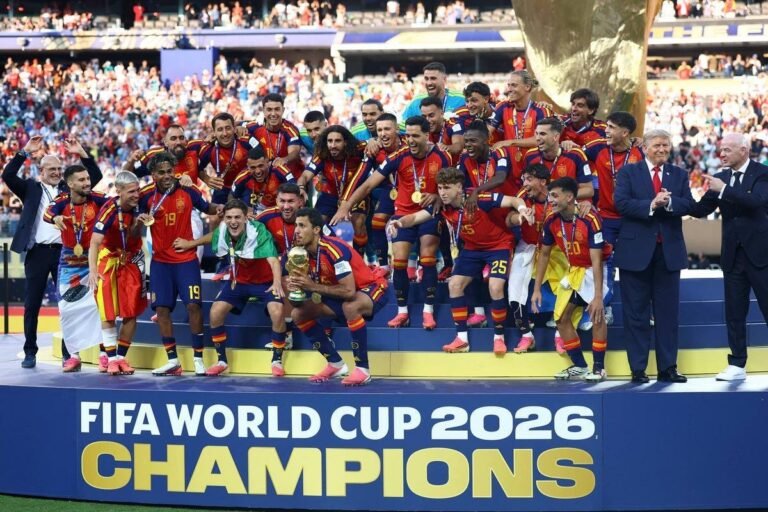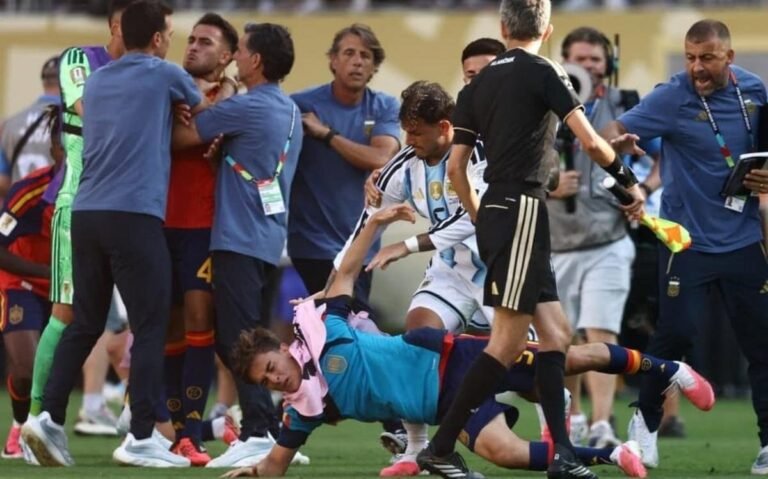


The scandal that has rocked the football world and global politics: Donald Trump’s interference in the World Cup has ignited a dangerous new fuse in the already delicate relationship between the United States and Europe.
The ball has barely started rolling at the World Cup, but the political pitch is already in turmoil. The historic tensions between the United States and Europe, which were already flirting with a breaking point over issues such as Greenland, trade tariffs, and NATO challenges, have now deepened into a new and unexpected arena: football. The news of a suspended American player being reinstated shortly before a crucial clash against Belgium has revealed a maneuver that many consider a direct affront to the integrity of the sport and international diplomacy.
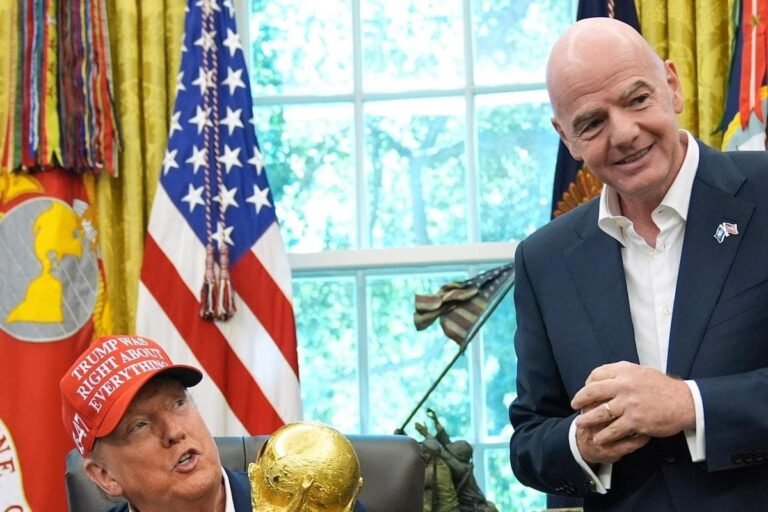
At the center of the controversy is former President Donald Trump, whose personal intervention in FIFA’s decision to overturn the suspension of striker Folarin Balogun has inflamed tensions. What was supposed to be just a World Cup match has turned into a global incident, raising serious questions about the impartiality of sporting institutions and the thin line between political power and the rules of the game. A passion for football is clashing with geopolitical interests.
The Scandal That Shook Fair Play
United States national team striker Folarin Balogun was suspended after receiving a red card, which would have barred him from taking the field against Belgium. However, FIFA’s surprising decision, announced on Sunday, reversed the punishment. The turnaround came to light with Trump’s admission: he had called FIFA President Gianni Infantino directly to request a review of the case. This unprecedented and direct interference has cast a shadow over the federation’s credibility.
European Fury and the Defense of Sporting Ethics
Europe’s response was immediate and sharp. UEFA, the governing body for European football, labeled FIFA’s decision as “unprecedented, incomprehensible, and unjustifiable”—a clear signal that the red line of sporting ethics had been crossed. The Royal Belgian Football Association, in a gesture of desperation and outrage, contested Balogun’s eligibility, but their appeal was summarily denied.
“This decision clearly raises many questions. If a phone call is truly the explanation for this incomprehensible decision, it would amount to undermining the most basic rules of football and sport.”
This statement from Maxime Prévot, Belgium’s Foreign Minister and a former referee, echoes the frustration of a Europe that sees the sport being instrumentalized for political interests. The integrity of football is being tested in a shocking way.
Between the Pitch and a Diplomatic Crisis
The incident in football is not an isolated case, but rather a symptom of an increasingly tense transatlantic relationship. Trump’s threats to annex Greenland, his criticism regarding NATO spending, and trade wars had already shaken mutual trust. Political analysts now see the intervention in football as a reinforcement of the “America First” policy, where international rules and norms seem to carry little weight in the face of Donald Trump’s interests.
The controversy, while centered on the pitch, has diplomatic resonances that cannot be ignored. The perception that the United States, under Trump, is operating outside established rules weakens an already fragile alliance. Although European leaders are avoiding a direct confrontation on the eve of a crucial NATO summit, where American support is vital for the defense of Ukraine, the seed of distrust has been planted.
The Lasting Impact on Sporting and Political Credibility
What the World Cup should have been—a celebration of talent and fair play—has turned into a stage for a political drama that embarrasses the sport. The decision to reverse Balogun’s suspension, driven by a presidential phone call, is a blow to the soul of football. Regardless of the result on the pitch, FIFA and the sport itself lose credibility when political interference subverts the most elementary rules.
Europe, with its democratic values and respect for institutions, now faces the challenge of dealing with a transatlantic partner that appears to operate under its own rules. This episode serves as a bitter reminder that, even in the sacred world of football, politics can dictate the game, and that the pursuit of victory at any cost can leave deep scars on the transatlantic relationship and the global passion for the most loved sport on the planet.