

Saudi Arabia has shelved the ambitious project for a stadium built on top of a cliff for the 2034 World Cup, citing a strategic reassessment of national investments.
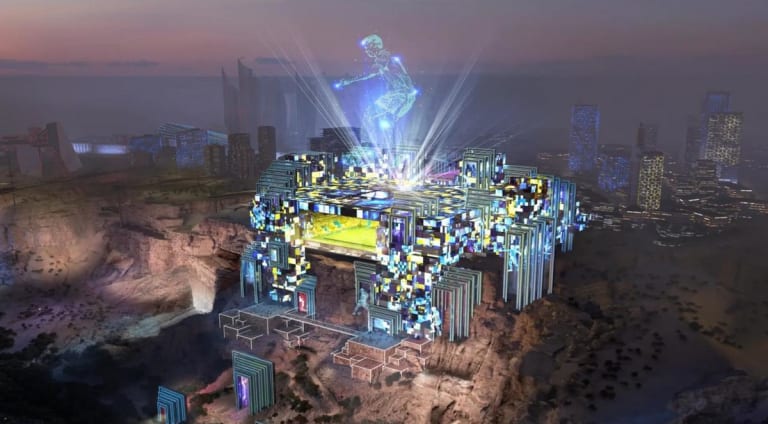
Saudi Arabia has officially made a significant shift in its plans for the 2034 World Cup. The iconic Prince Mohammed bin Salman stadium project, which envisioned a futuristic structure suspended over a 200-meter cliff on the outskirts of Riyadh, has been scrapped.
The decision reflects a moment of economic caution for the kingdom. Faced with an unstable global scenario marked by geopolitical tensions, the country is dealing with a GDP contraction exceeding 3%, which forced the monarchy to review the feasibility of multi-billion-dollar projects previously announced as pillars of the modernization of local sports.
The end of an ambitious architectural concept
The stadium project, budgeted at around $14 billion, aimed to raise the standard of global sports entertainment. The proposal included a retractable roof and walls entirely covered by LED panels, designed to offer an immersive visual experience for 45,000 fans.
The structure was set to be a focal point in the Qiddiya complex, a entertainment and sports megaproject located 45 kilometers from the capital. With the cancellation, the country is now focusing its efforts on optimizing the budget allocated to the PIF (Public Investment Fund), the financial arm responsible for funding everything from major Premier League clubs to Saudi league giants.
The redefinition of the kingdom’s economic priorities, pressured by a challenging international context, forced the abandonment of projects that, although visually revolutionary, lost ground on the scale of urgency in state planning.
Paths to 2034
Despite the retreat, Saudi Arabia reaffirms its unwavering commitment to hosting the 2034 World Cup as the sole host. The original bid established the use of 14 stadiums to host the 48 participating national teams, and the government maintains that dropping this specific arena will not compromise the delivery of the event within FIFA‘s schedule.
The clean energy and infrastructure sector remains attentive to the next steps. The Qiddiya project, which initially projected investments around $700 billion, continues to be a watershed moment for the Saudi economy. The future of the remaining arenas and the adaptation of Riyadh‘s urban network will be the new barometers for assessing the country’s resilience in delivering one of the most expensive and technological World Cups in history.