
With Pep Guardiola’s refusal to coach the Italian National Team, the FIGC now focuses its efforts on Andrea Pirlo, seeking a new direction.
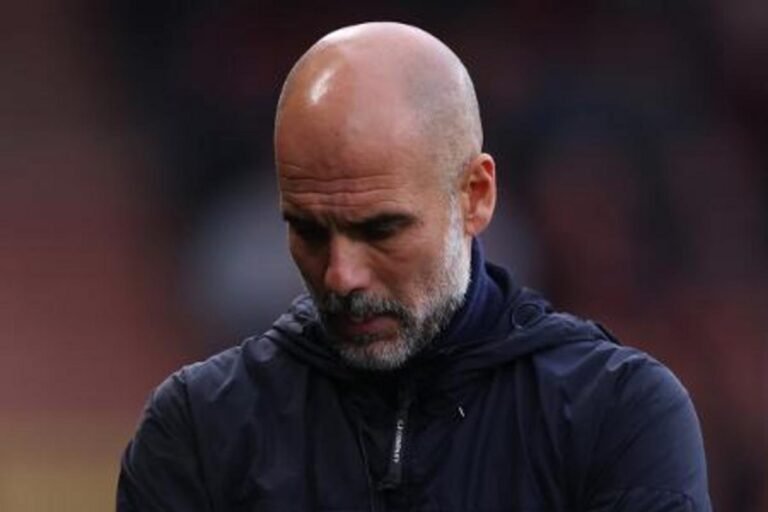
The news that shook the European football scene has been confirmed: Pep Guardiola, one of the most sought-after coaches in the world, has turned down an invitation to take the helm of the Italian National Team. The decision, revealed by the Italian newspaper La Gazzetta dello Sport, puts an end to weeks of speculation and completely reshapes the plans of the Italian Football Federation (FIGC) for the future of the Azzurri.
The Spanish genius’s “no” was not easy. After days of intense reflection, Guardiola informed the national team director of the FIGC, Paolo Maldini, that although honored by the approach and the symbolic weight of the position, he does not feel ready to return to the sidelines at this time. With this refusal, the FIGC shifts its attention to a name that embodies the very essence of Italian football: Maestro Andrea Pirlo.
Guardiola’s decision and his reasons
Pep Guardiola‘s rejection, after leaving Manchester City mid-year, has deep roots. His primary motivation is reportedly the priority of dedicating more time to his family, following years of intense routines and work in different countries. He had publicly expressed a desire for a period of rest, with no defined timeline for a return.
The contract proposed by the Italian Federation was ambitious, outlining an eight-to-ten-year plan, which demonstrated the seriousness and desire to have Guardiola as the architect of a new era. However, not even the prospect of a long-term project or the symbolism of managing one of the world’s most traditional national teams was enough to dissuade him from his personal decision.
Pirlo: FIGC’s gamble on innovation
With Guardiola closing the door, Andrea Pirlo emerges as the FIGC‘s primary target to lead the Italian National Team. The former midfielder’s name is gaining traction within the federation’s corridors, with Paolo Maldini and former Brazilian fullback Leonardo – a consultant for the team – seeing Pirlo as the ideal innovative profile to implement a new playing philosophy for the squad.
The Maestro, a 2006 World Cup winner as a player, represents a legendary figure for Italian football. His tactical intelligence on the field was always a differentiator, and the expectation is that he can transfer this vision to the coaching bench, developing a modern and competitive style for the Azzurri.
The Maestro’s coaching career
Andrea Pirlo‘s coaching career began in 2020. Since then, he has accumulated experience with clubs such as Juventus, where he managed in the Italian top flight, followed by spells at Karagümrük in Turkey and Sampdoria, also in Italy. Currently, Pirlo is coaching United FC in the United Arab Emirates.
This experience, though still recent, is seen as an asset by the FIGC. His exposure to different leagues and football cultures, combined with his sharp footballing vision as a player, positions Pirlo as a candidate who, despite his youth in the role, can bring the necessary renewal and passion to guide the Italian National Team.
Pep Guardiola‘s refusal of the Italian National Team is not just news; it’s a watershed moment for the FIGC. The pivot towards Andrea Pirlo signals a bold and symbolic gamble, prioritizing Italian identity and the pursuit of modern football. The Azzurri, yearning for new times and the revival of past glories, are preparing to open a new chapter under the baton of one of their greatest icons, hoping that the grit, love, and passion the Maestro displayed on the field will translate into victories from the technical area.