
FIFA’s controversial proposal to attract private investors and centralize commercial control of global football has sparked a wave of fierce criticism across Europe.
FIFA, the global governing body of football, finds itself in the middle of a perfect storm. Barely after announcing its ambitious project to create Fifa Forward Enterprise (FFE), a new entity to manage its commercial activities and attract private investment, it has been hit by a barrage of criticism. The proposal, which aims to amass a monumental $10 billion in revenue, has sparked outrage and strong opposition, especially from heavyweights like UEFA and the European Union, who view the plan as a threat to the integrity of the sport.
The crux of the controversy lies in FIFA‘s intention to maintain “exclusive control” of the FFE, even with the entry of investors, ensuring “exclusive authority” over football governance, competitions, and regulations. This arrangement has raised a red flag among key European football institutions and government bodies, who fear excessive commercialization and the erosion of the sport’s core values.
European Union and UEFA lead the opposition
The most forceful reaction came from the European Union. European Commissioner Glenn Micallef, speaking via X, did not hesitate to declare:
“Hands off our sport.” He argued that “the unbridled commercialization of football has become harmful” and that FIFA‘s project “threatens what makes football the most popular sport in the world.” The European Commission has promised to carefully review the proposals, raising concerns regarding competition law.
This stance echoes the firm declaration made a day earlier by UEFA, which deemed the project “a line that football governing bodies should never cross.”
European resistance is organizing and gaining momentum, with the French Minister of Sports, Marina Ferrari, confirming on X that European football institutions would meet urgently to debate the matter.
Global repercussions and concerns
The wave of dissatisfaction is not limited to Europe. The FA (The Football Association) expressed that it is “deeply concerned,” while the DFB (German Football Association) was even more direct, labeling the proposal “an absolute attack on football.” Negative reactions have also echoed from other parts of the football world, such as Concacaf and the Asian Football Confederation (AFC), indicating widespread concern regarding the direction FIFA intends to take.
The FFE has a robust financial projection, expecting to generate $4.2 billion this year alone, with the promise of fully reinvesting net profits back into the sport through the FFFP (FIFA Fast Forward Program). To make this venture viable, FIFA is working with financial giants such as J.P. Morgan and Joshua Kushner‘s Thrive Eternal fund.
Infantino and the commercial future of football
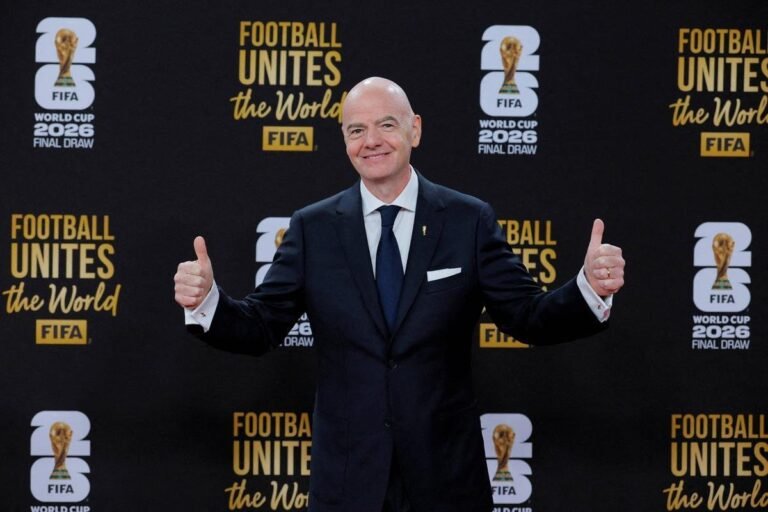
Reports released by The Times suggest that FIFA president Gianni Infantino himself could take charge of the FFE. There are also reports that financial incentives would be offered to federations that sign on to the proposal before September 19, adding another layer of complexity to the controversy.
This investment and commercial restructuring plan aligns with Infantino‘s strategy to “unlock the commercial potential” of FIFA, which includes the controversial expansion of the World Cup to 64 teams—another measure that has already generated significant debate.
The current scenario is one of uncertainty and high tension. FIFA, under the leadership of Gianni Infantino, seeks to radically transform the business model of global football, aiming for billion-dollar revenues. However, resistance from important voices in sports and politics, especially in Europe, signals that the path to establishing the FFE will be difficult and fraught with conflict.
The battle for the soul of football, between tradition and commercialization, has only just begun, and its outcome promises to shape the future of the world’s most beloved sport. For more analysis and updates on this topic, keep following the M360 Team.