

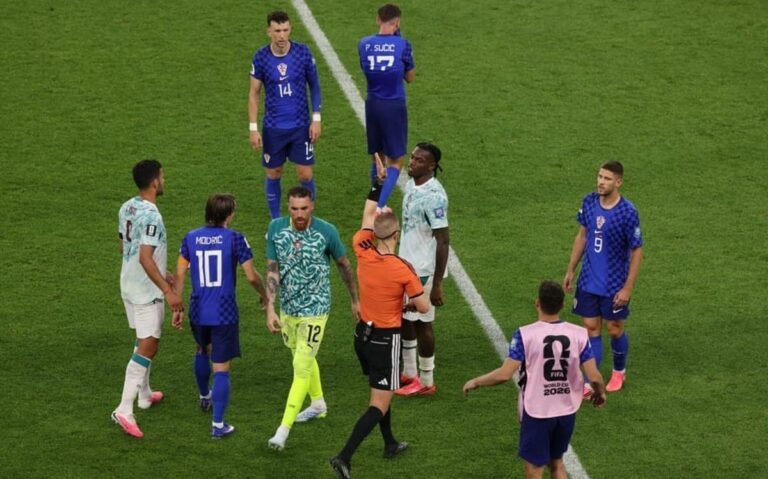
Croatia’s disallowed goal against Portugal at the World Cup sparks heated debate. FIFA intervenes and explains the crucial decision involving ball chip technology.
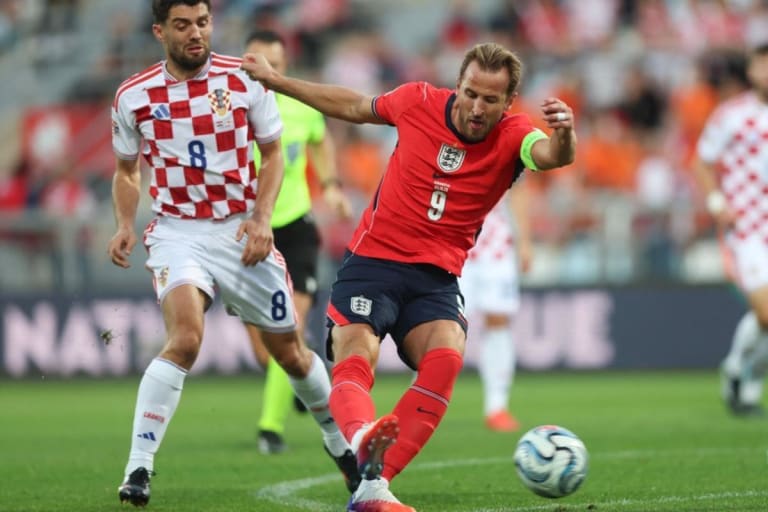
The World Cup is a stage for intense emotions and, at times, controversies that echo across the globe. The recent clash between Portugal and Croatia culminated in last-minute drama, with a disallowed Croatian goal sealing the team’s elimination. The decision, which sparked protests and heated debates among fans and experts, brought technological intervention in modern football into the spotlight, prompting a statement from FIFA itself.
The focal point of the discussion was the performance of the chip embedded in the official tournament ball, the AdidasTrionda. This device, designed to detect the slightest contact with millimeter precision, was responsible for identifying a touch that, for many, went unnoticed, but which the refereeing staff deemed crucial for the offside call.
The Controversy That Decided a Fate
Croatia saw their hopes of a draw and potential qualification dashed in the final seconds of their match against Portugal. The goal, which could have sent the game into extra time, was initially validated on the field but promptly reviewed and disallowed by VAR, based on data provided by the chip. It was a harsh blow for the team, who exited the competition bitterly and with a sense of injustice for their fans.
FIFA’s Response and the Technology
Given the immense repercussion, FIFA was quick to issue a statement, using its social media channels to clarify the incident. In a detailed announcement, football’s governing body defended the integrity of the decision, emphasizing the technology’s precision.
According to data provided by the Connected Ball Technology housed within the Trionda, the official match ball of the World Cup, it was proven that contact was made by Igor Matanović of Croatia in the build-up to the goal against Portugal, allowing the referee to correctly determine offside and disallow the goal.
The organization reiterated that the IMU sensors present in the ball are capable of detecting the slightest touches, offering an “unprecedented level of data for quick and accurate decisions” to match officials.
The Trionda Revolution: Millimetric Precision
The Trionda ball, a technological leap by Adidas in partnership with the company Kinexon, is a true on-field laboratory. Its high-performance motion sensor, embedded in an inner layer, collects and transmits information 500 times per second to the VAR system. This impressive frequency ensures a precision that video cameras alone often cannot capture, providing referees with objective and undeniable data.
The incident involving Portugal and Croatia is a strong reminder of technology’s growing influence in football. While the ball chip and VAR aim for fairness in decisions and error reduction, they inevitably spark debates about the game’s essence and the scope for human interpretation. FIFA reaffirms its confidence in these tools, which promise to increasingly shape the future of the sport, bringing a new level of accuracy to World Cup arenas.