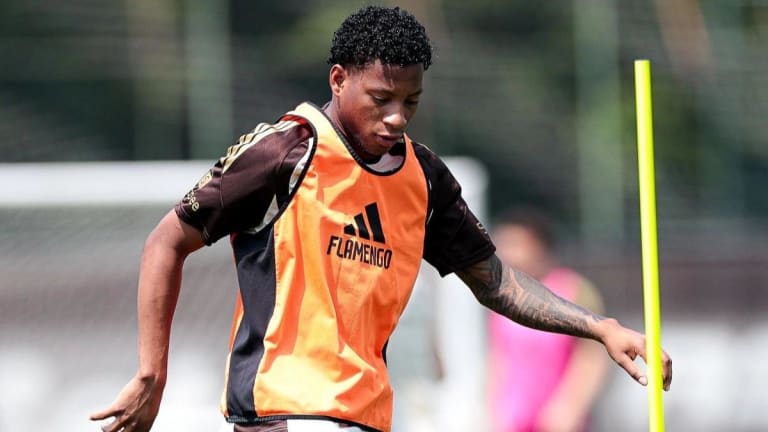


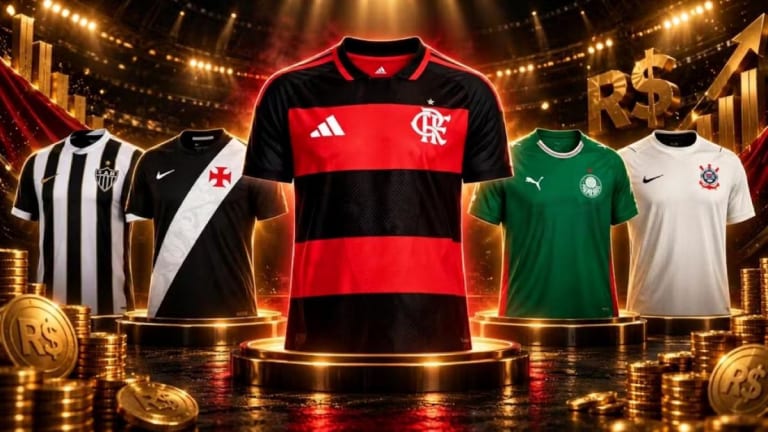
Flamengo leads the ranking for the most valuable jerseys in the Brazilian Serie A, reaching a price point of nearly R$ 800 per unit.
The Brazilian football season has arrived with a wave of new kits, highlighting the financial impact on fans looking to wear their club’s colors. With all 20 participants in the national top flight releasing their uniforms for the new competitive cycle, the cost of acquiring official merchandise has become a major topic of discussion in the stands and on social media.
A detailed survey revealed that the average price charged in official stores hovers around R$ 469.39, signaling an increasingly exclusive market. The gap between the extremes of the Campeonato Brasileiro is striking, with a significant difference between the R$ 799.99 price tag for the most expensive option and R$ 329.99 for the most affordable one.
The Most Valuable Jersey in the Elite
At the top of the national list is the Rio de Janeiro-based Rubro-Negro, whose fans must shell out R$ 799.99 to purchase the high-performance version worn by players on the pitch. Right behind the club from Gávea, giants such as Corinthians, Vasco da Gama, and Atlético-MG share the second spot, with prices set at R$ 749.98.
This sharp price variation occurs due to the different tiers of products marketed by sports brands. While editions aimed at general consumption focus on durability and casual use, the authentic match-day models incorporate advanced ventilation technologies and ultralight fabrics identical to those used in official matches.
Brands and Suppliers in the National Landscape
The first-division sports apparel market is shared by ten different suppliers, demonstrating the tournament’s commercial diversity. Puma stands out by stamping its brand on four teams, while Nike and Adidas share the space with three partners each, dressing traditional powerhouses of the national sport.
Other companies such as New Balance, Umbro, and Volt also maintain a significant presence in the tournament, providing uniforms for multiple clubs. However, the pricing strategy varies independently for each brand, primarily reflecting the commercial policy and bargaining power of each sports institution with its industrial partners.
With the continuous increase in the cost of official products, club boards and suppliers face the challenge of balancing high profit margins with the purchasing power of the average fan. The expectation is that as the competitions progress and third kits are released, the market will maintain the trend of rising prices for licensed merchandise.
Information based on the original report produced by the M360 Team.